 Whales and light
Guides
Language
EnglishCurrency
US dollar · $GetYourGuide converts to the currency you select here.
Guide · Climate
Punta Arenas temperature, month by month
The Punta Arenas temperature rarely swings far: cool summers, near-freezing winter nights and rain spread through the year. Here are the averages for every month and what they mean for a trip onto the water.
Check availabilityfrom $365 · no cancellation fee
Editorial team, puntaarenaswhalewatching.comUpdated October 22, 20267 min read9 sources
A cool climate with little swing
Punta Arenas sits far enough south that its summer feels like spring elsewhere. The averages here come from the World Meteorological Organization normals for the airport station north of the city, covering 1991 to 2020.1 The daylight hours are our own calculation from the city's latitude, not part of those normals. No month is milder than January, whose average daily high is 15.3 °C and low 6.9 °C.1 Those decades of readings smooth out the odd heatwave or cold snap, so expect individual days to wander above and below them.
The coldest stretch is midwinter. In July the average daily high is 4.2 °C and the average low is -0.7 °C; June is barely warmer, with a high of 4.3 °C and a low of -0.5 °C.1 So the whole year moves within a narrow band between the coldest nights and the warmest afternoons.
What the numbers cannot show is the wind. The Strait of Magellan funnels weather through the city, and a breezy afternoon on the waterfront can feel much colder than the same reading on a still day. Use the table below as a baseline and add a layer for every hour you expect to spend on the water or on an exposed headland. Locals dress in layers for exactly this reason, and visitors who copy them rarely regret it.
Summer: December to February
Summer brings the mildest days and the most light. December averages a high of 14.3 °C and a low of 5.8 °C, with 16.9 hrs of daylight at mid-month.1 February is a touch cooler at 14.8 °C by day and 6.6 °C at night, and it is the driest of the three summer months with 32 mm of rain on 7 days.1 Nights stay cool enough that a warm sweater is welcome after sunset even in the middle of summer.
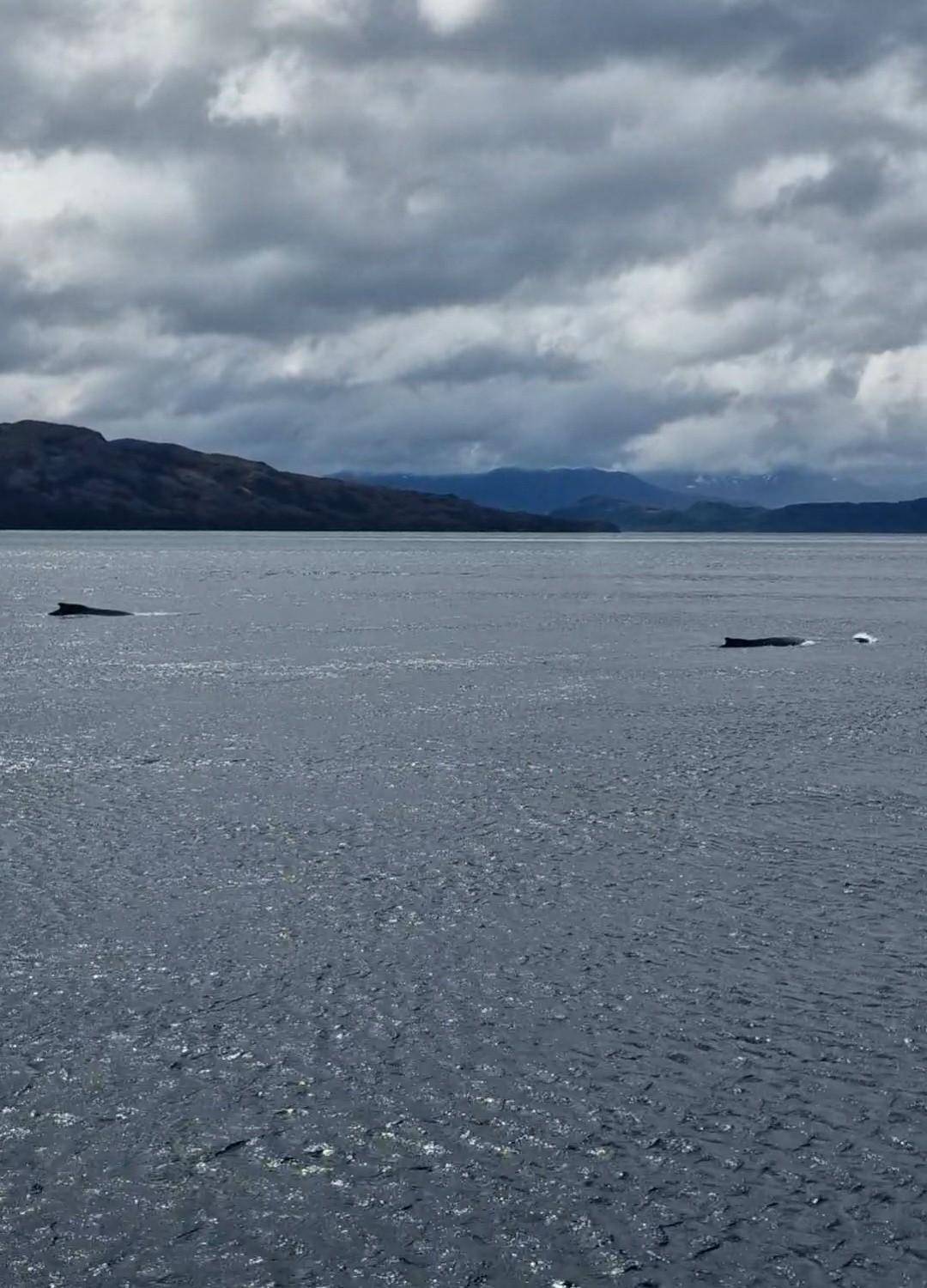
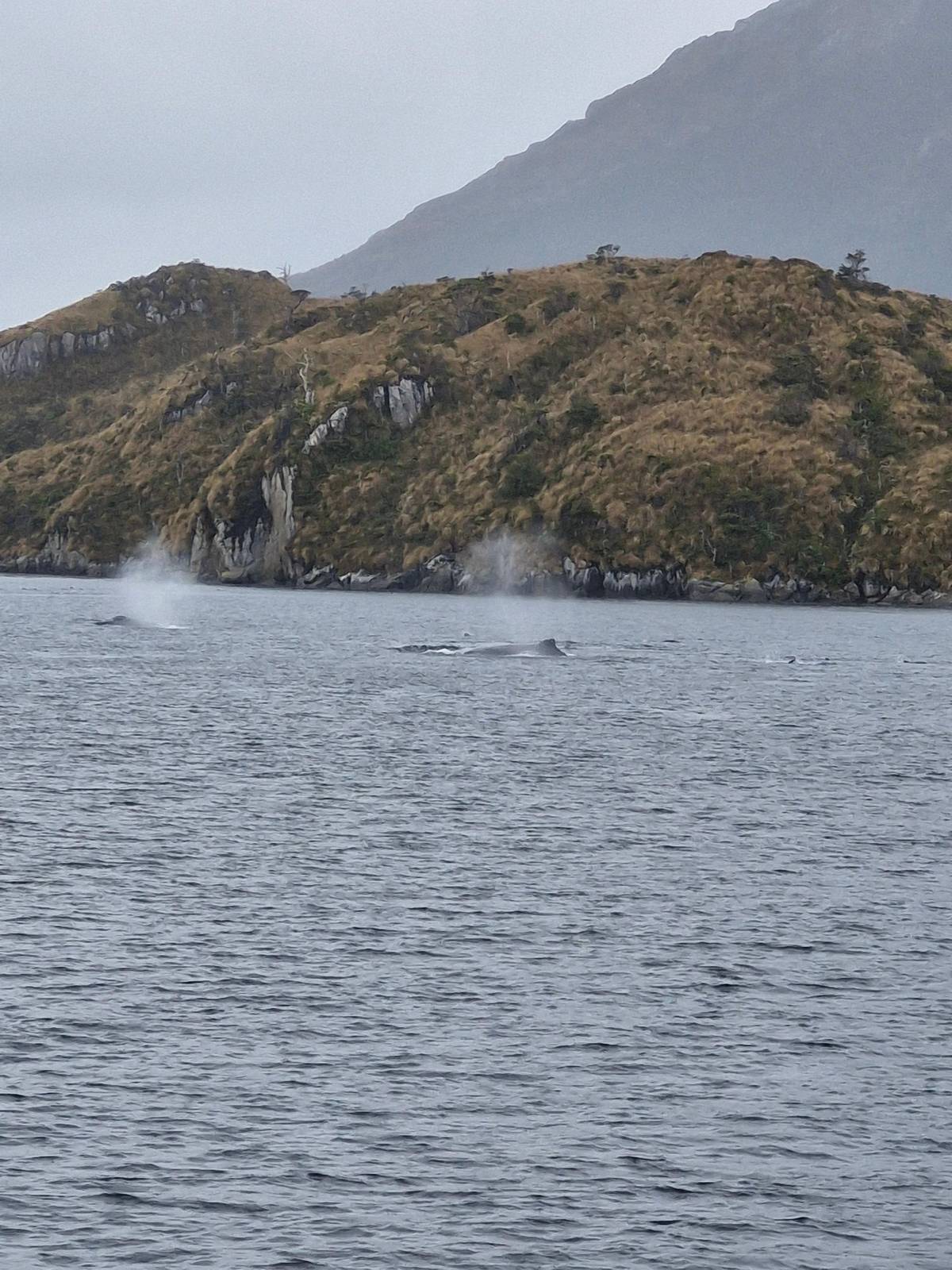
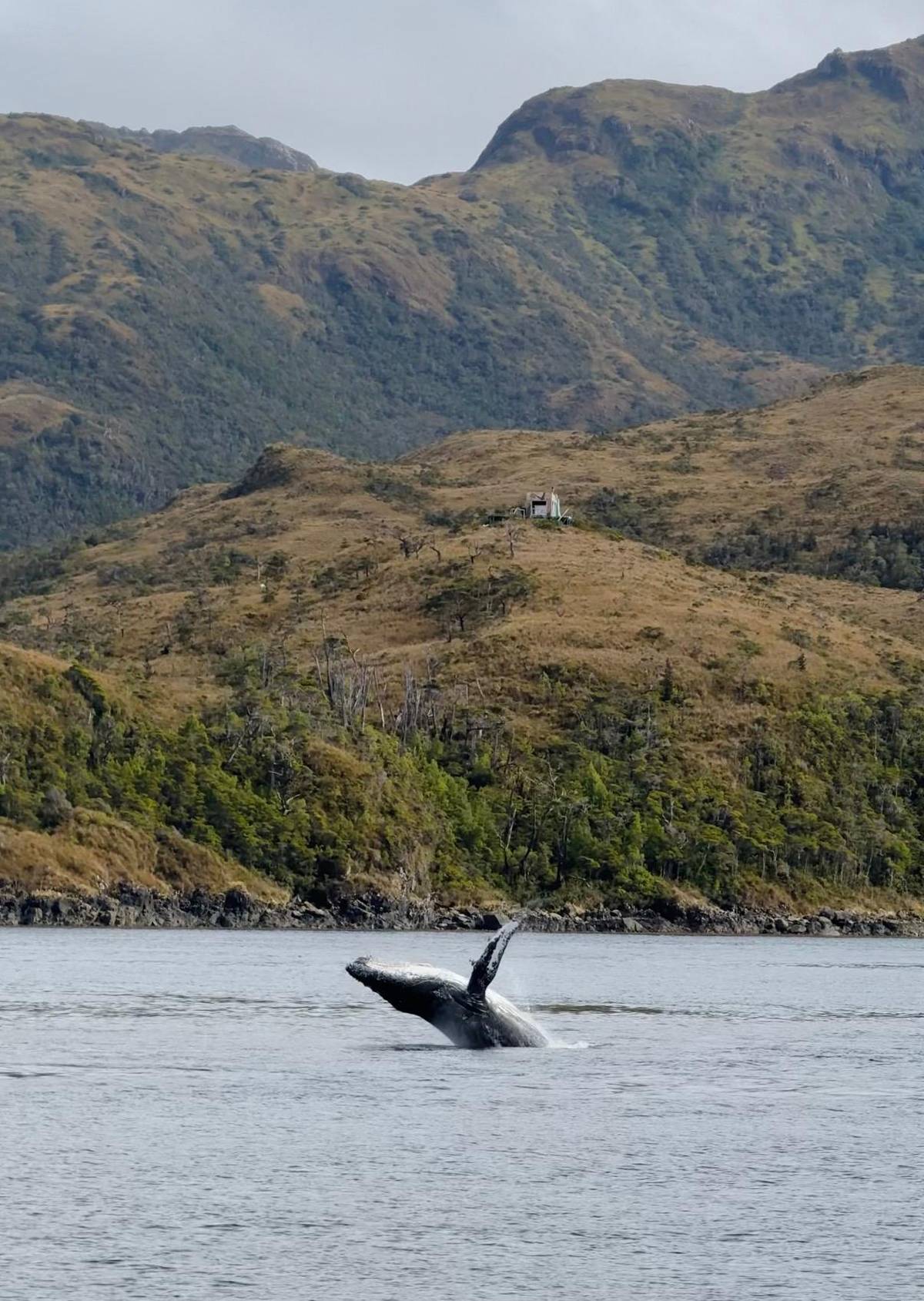
These are also the months when the humpback whales are at their peak around Isla Carlos III, between December and March.2 The long evenings help on a full-day boat trip: you leave and return in daylight, and the light lasts for a late walk along the waterfront.
Summer is not warm, though. Even in January you will want a fleece and a windproof shell on deck, and gloves for the morning crossing. Think of it as the season of long, bright, changeable days rather than beach weather. Sunburn is easy to underestimate in the cool air, so a hat and sunscreen belong in the day pack as well.
Month by month
Dark hours and wet days through the Punta Arenas year
Hours without sunDays with precipitationSeason
Climate table
Highs, lows, daylight and wet days for every month
| Month | Daylight (h) | Darkness (h) | High / low | Wet days | Humpbacks at Carlos III |
|---|---|---|---|---|---|
| Jan | 16.4 | 7.6 | 15 / 7 °C | 8 | peak |
| Feb | 14.6 | 9.4 | 15 / 7 °C | 7 | peak |
| Mar | 12.6 | 11.4 | 13 / 5 °C | 8 | peak |
| Apr | 10.5 | 13.5 | 10 / 4 °C | 9 | seen |
| May | 8.6 | 15.4 | 7 / 2 °C | 8 | seen |
| Jun | 7.6 | 16.4 | 4 / 0 °C | 7 | seen |
| Jul | 8 | 16 | 4 / -1 °C | 7 | |
| Aug | 9.5 | 14.5 | 6 / 0 °C | 7 | |
| Sep | 11.6 | 12.4 | 8 / 1 °C | 6 | |
| Oct | 13.7 | 10.3 | 11 / 3 °C | 6 | |
| Nov | 15.7 | 8.3 | 13 / 5 °C | 6 | |
| Dec | 16.9 | 7.1 | 14 / 6 °C | 8 | peak |
Mean daily high and low and the count of days reaching 1 mm of rain are World Meteorological Organization normals for Punta Arenas airport, 1991 to 2020; the mid-month daylight is our own calculation.1 Season according to IUCN Marine Mammal Protected Areas Task Force (Western Magellan Strait IMMA).2
Three seasons
Which season fits your trip?
Whales and light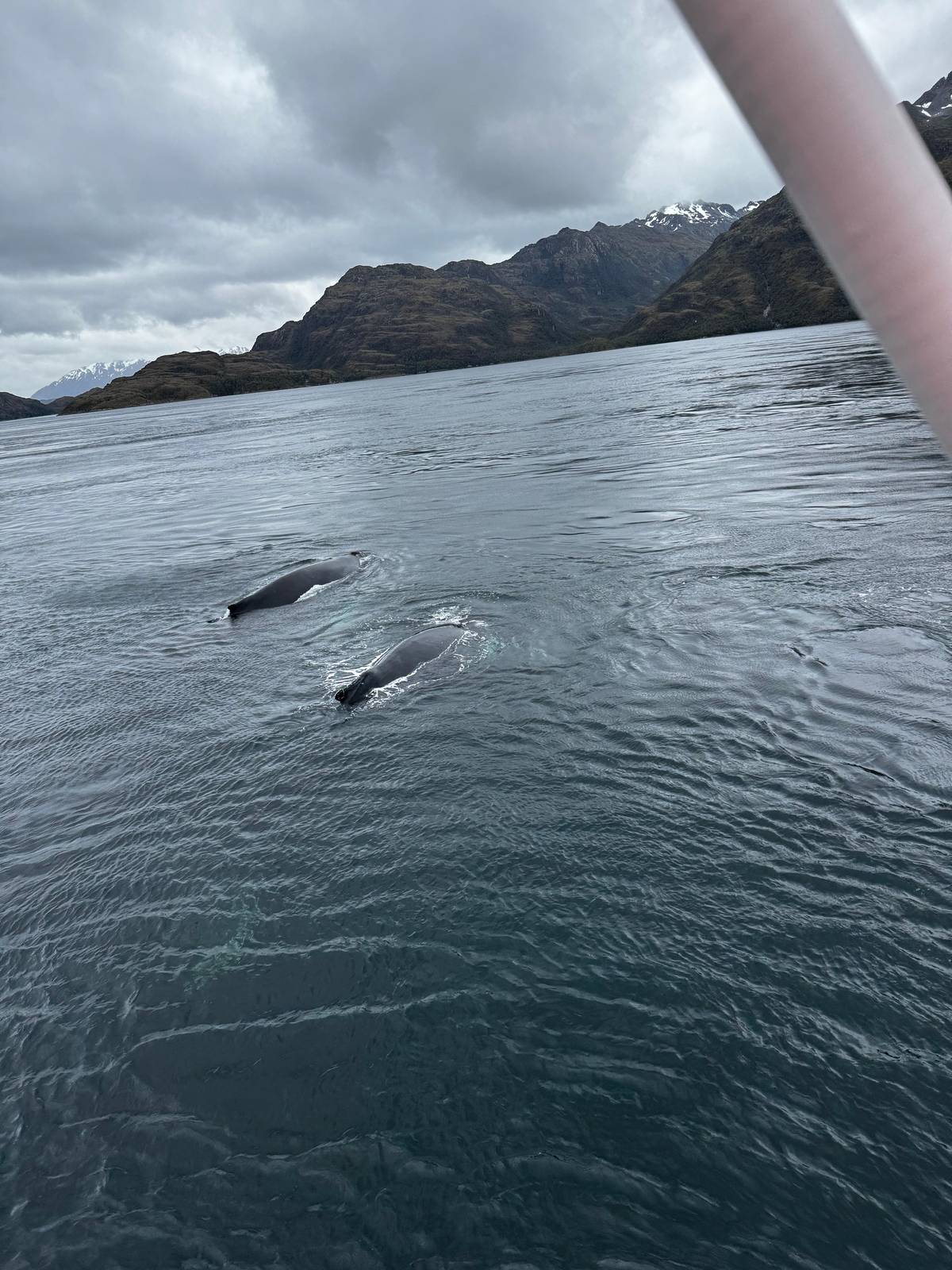 Wettest stretch
 Driest stretch
Autumn: March to May
Autumn cools quickly. March still averages a high of 13 °C, but by April it is 10.1 °C and by May 6.9 °C.1 Nights follow the same path, from 5.4 °C in March to 1.5 °C in May.1
April is the wettest month in the record, with 45 mm of rain and 9 days of at least 1 mm.1 Daylight shrinks fast as well, from 12.6 hrs at mid-March to 8.6 hrs at mid-May.1 A full day on the water in May begins and ends close to darkness. Plan longer excursions for the first half of the season, when the extra light gives you room to linger at viewpoints.
For wildlife, autumn is a season of endings. Researchers logged humpback sightings between December and June, so whales can still be around in the early autumn weeks.3 The Magdalena penguin colony stays open to visits until mid-April, and the king penguin reserve until its winter closure.45 Autumn colors in the forests around the city add a reason to stay on into April if your dates are flexible.
Packing list
Clothes for every season in Punta Arenas
01
Every month
- A warm mid-layer and a windproof shell
- A waterproof jacket
- Hat and gloves
02
Extra by season
- Summer: sunglasses for the long light
- Winter: thermals and grippy shoes
- Autumn: plan around shorter days
Video
Weather of Patagonia: Punta Arenas, Chile
The video stays switched off until you hit play.
Punta Arenas in winter: June to August
Punta Arenas in winter is cold, short on light and calm in tourist terms. June averages a high of 4.3 °C with 7.6 hrs of daylight at mid-month, and July a low of -0.7 °C.1 August warms only slightly, to a high of 5.7 °C and a low of 0.1 °C.1
Rain does not rise in winter; it actually falls a little. June and July each average 31 mm on 7 days, and August 30 mm.1 With average lows around freezing, though, cold mornings and icy pavements are part of the deal, so pack shoes with grip. Taxis and hotel shuttles become more useful when it is dark by late afternoon.
Winter is the wrong season for the whale trip and the king penguins: the reserve at Bahía Inútil closes from June to October.5 It can be a fine time for the city itself, its museums and the waterfront, and for travelers on their way to the Antarctic season later in the year. Many visitors also pass through in winter on their way to the far south, and a day or two in the city is easy to fill.
Spring: September to November
Spring is the driest part of the year in the station record. September and October each average 25 mm, and November 23 mm, the lowest of any month, with 6 rain days in each of those months.1 Temperatures climb from a high of 8.3 °C in September to 12.9 °C in November.1
Daylight returns fast. Mid-September has 11.6 hrs and mid-November 15.7 hrs.1 By late November the evenings feel like summer again, even if the wind keeps the air sharp. Spring wind can still be strong, so carry the same windproof layer you would bring in any other season.
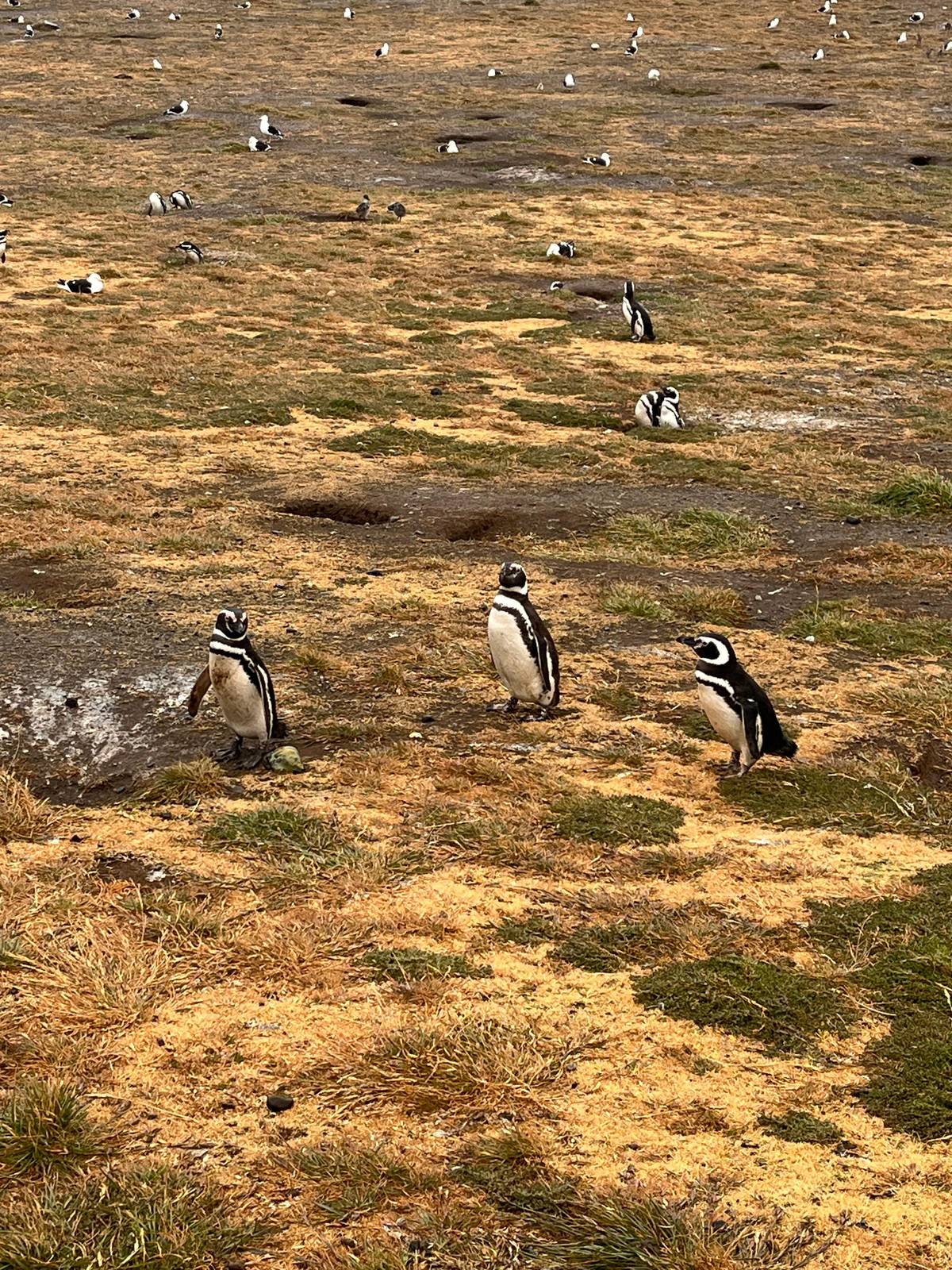
Spring is penguin season. Magellanic penguins breed from September to February, and the Magdalena monument opens to visitors in October.67 The whale peak follows from December, so a trip at the turn of November and December can catch the start of both. Early spring is also a quieter time to visit the museums and waterfront before the summer crowds arrive.
When the weather decides for you
Boat trips on the strait run to the weather rather than the calendar. The kayak trip into the Francisco Coloane Marine Park says plainly that it may be changed or rescheduled for the weather. One Magdalena listing names strong wind and low tide as reasons a sailing may be modified or cancelled, and offers rescheduling or an immediate refund if that happens. Treat any forecast as a guide, not a promise.
That is why the cancellation terms matter as much as the month. The booked whale day lists free cancellation up to 24 hours before and reserve now, pay later. Booking such a trip early in your stay, with free days after it, gives the operator room to move you if the wind closes the strait on your first date.
Ferries feel the weather too. Chile's tourism board notes that the Primera Angostura crossing runs from 8 am until past midnight, while the longer Porvenir ferry has only two departures a day.8 If a king penguin day falls through, the shorter crossing is the more flexible of the two, but it adds hours of driving on the far side.
Dressing for the strait in any month
Because the range of temperatures is narrow, the same packing list works most of the year with small changes. Bring a warm mid-layer, a windproof and waterproof shell, a hat and gloves, whatever the month. In winter add thermal underwear and a thicker jacket; in summer add sunglasses and a cap for the long light. Pack a buff or scarf as well; it protects your neck from wind on deck better than a collar alone.
On a boat, dress for the water rather than the air. The US National Weather Service notes that cold shock can be as severe in water of 10 to 15 °C as in water of 2 °C.9 That is a reason to take the crew's safety briefing seriously and keep your life jacket on deck, not a reason to stay ashore.
Layers beat one heavy coat. On a full-day trip you move between a heated cabin and an open deck many times, and being able to open and close a layer quickly keeps you comfortable in both. A small dry bag for spare gloves and a phone completes the kit. Waterproof trousers are worth the space in your bag if you plan to spend long stretches outside.
Pick your date
A day with the humpbacks of the strait
Meals, the navigation and a bilingual guide included; cancel for free up to a day before.


You ask,we answer.
What is the warmest month in Punta Arenas?
January. The average high is 15.3 °C and the low 6.9 °C.1
How cold does it get in winter?
Around freezing at night. July averages a low of -0.7 °C and a high of 4.2 °C.1
Which month gets the most rain?
April. It averages 45 mm on 9 days of at least 1 mm.1
Which month is driest?
November. It averages 23 mm of rain.1
How long are the days in summer?
Very long. Mid-December brings 16.9 hrs of daylight.1
Is winter a good time for whale watching?
No. Humpback presence around Carlos III peaks from December to March.2
Sources
What this text is based on
- 1World Meteorological OrganizationWMO Climate Normals, Station Punta Arenas airport (WMO 85934), 1991 to 2020↩
- 2IUCN Marine Mammal Protected Areas Task ForceWestern Magellan Strait IMMA↩
- 3Journal of Cetacean Research and Management 5(2), International Whaling CommissionRediscovery of a humpback whale (Megaptera novaeangliae) feeding ground in the Straits of Magellan, Chile↩
- 4↩
- 5Reserva Natural Pingüino ReyPreguntas frecuentes↩
- 6Animal Diversity Web, University of Michigan Museum of ZoologySpheniscus magellanicus (Magellanic penguin)↩
- 7↩
- 8Chile Travel (Sernatur)What to do in Tierra del Fuego↩
- 9US National Weather ServiceCold Water Hazards and Safety↩
Keep reading