 Warmth
Guides
Language
EnglishCurrency
US dollar · $GetYourGuide converts to the currency you select here.
Guide · Safety
Is whale watching dangerous? Staying safe, warm and well
Whales are huge, but the risks on a day out from Punta Arenas come mostly from cold water, wind and a rolling boat. Here is how the rules keep boats at a distance, and how to dress and prepare.
Check availabilityfrom $365 · no cancellation fee
Editorial team, puntaarenaswhalewatching.comUpdated October 22, 20267 min read23 sources
Quick answer
- 01The whales
- Boats must keep at least 100 m from large whales.1
- 02The law
- Chile bans hunting or harassing whales in its waters.2
- 03The water
- Cold shock can strike in water of 10 to 15 °C.3
- 04Seasickness
- Tablets work best taken before you sail.4
- 05Clothing
- The booked tour asks for warm clothing and comfortable shoes.
The whales are not the danger
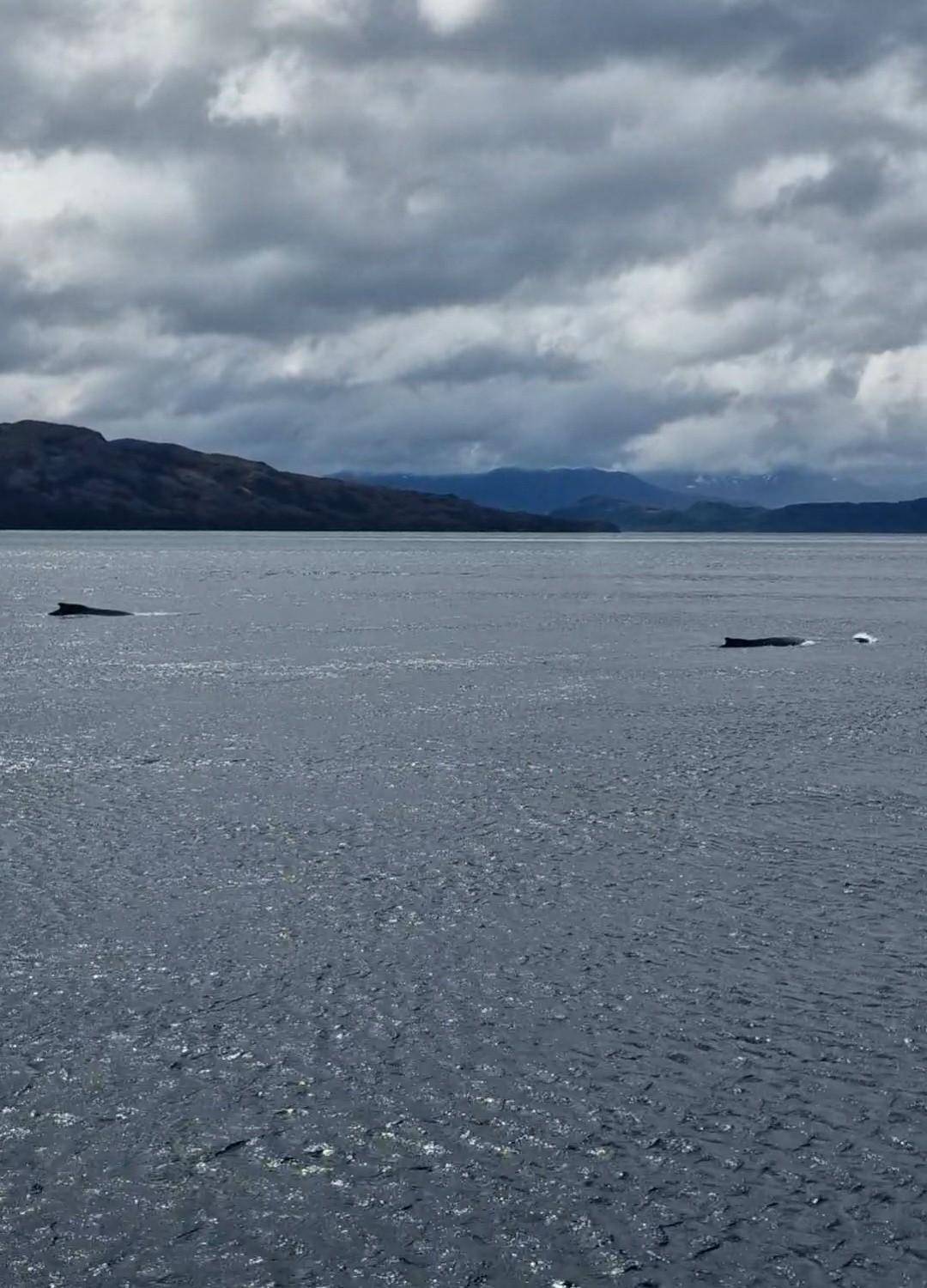
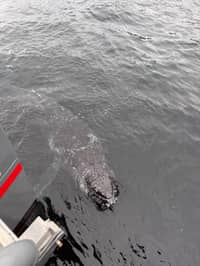
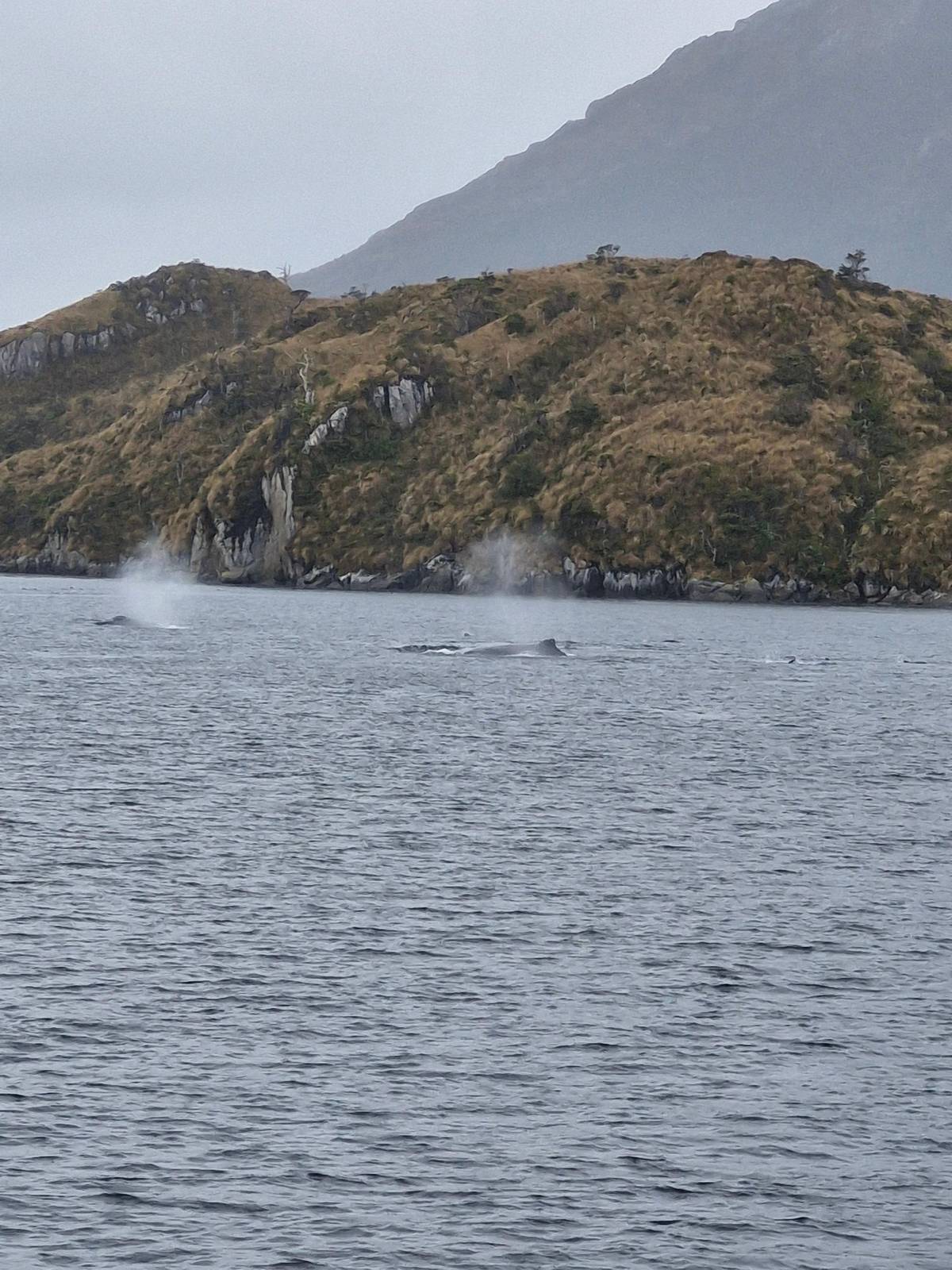
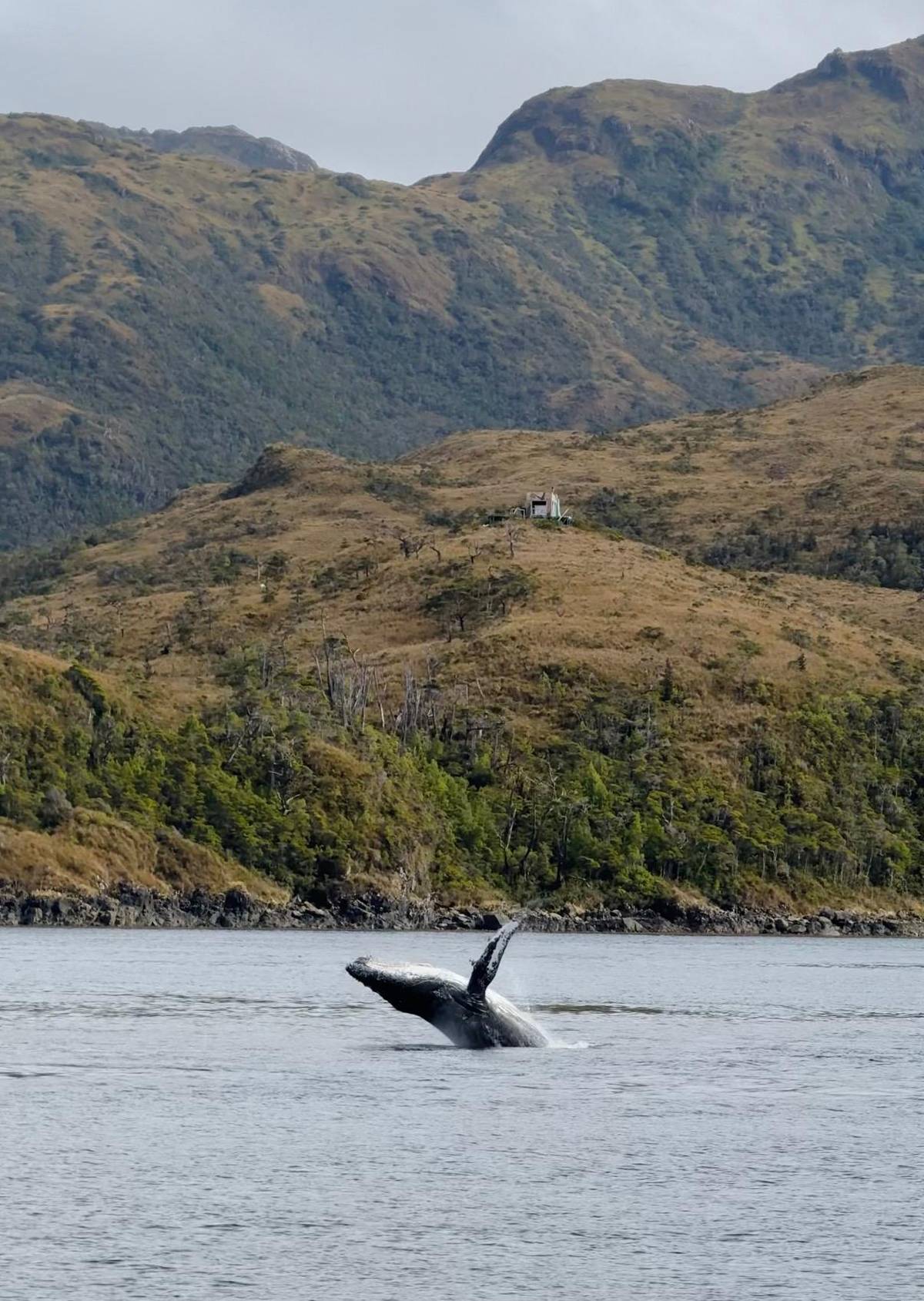
Humpbacks are among the largest animals you will ever see from a boat. The US National Marine Fisheries Service gives their size as up to about 40 tons and about 60 feet long.5 It is natural to wonder whether being close to an animal that size is safe, and the honest answer is that the rules exist precisely so that you are never that close. Watching a tail rise and slide under the surface from that distance is thrilling enough on its own.
Chile's observation regulation, Decree 38 of 2011, requires recreational watching boats to keep at least 100 meters from large whales and 50 meters from dolphins and porpoises, measured to the nearest animal.1 Approaches must come from behind and parallel to the animals, and if they show signs of stress the boat must move at least 200 meters away from large whales.6
With a mother and calf, the boat approaches on the mother's side and never comes between the two.7 Those rules protect the whales first, but they also keep a large, unpredictable animal at a comfortable distance from your boat. A whale may still surface nearer than the boat would approach, and that is a moment to stay still and enjoy.
Before and during
Staying well from the night before to the return
-
The night before
Sleep and pack
Lay out your layers, passport and tablets.
-
Before boarding
Take your tablet
Medication works best before exposure.4
-
On board
Find the calm spot
Avoid the bow, the place of most motion.8
-
Near the whales
Stay still
The boat keeps at least 100 m away.1
-
On the way back
Warm up inside
Watch for shivering and drowsiness.9
Chile protects its whales by law
Whale watching here takes place inside a legal sanctuary. Chile's Law 20.293 declares the country's waters a zone free of cetacean hunting and prohibits killing, hunting, capturing, harassing, possessing, transporting or trading any whale or dolphin.2 One of its stated goals is that whale watching be carried out in a responsible, regulated and sustainable way.10
The feeding ground itself is protected too. Supreme Decree 276 of 2003 created the Francisco Coloane marine and coastal protected area next to Isla Carlos III, with a marine park inside it.11 The park's purpose is to preserve the humpback feeding area and the breeding areas of Magellanic penguins and sea lions.12
The regulation also governs the boats. Watching vessels must have protected propellers, and motorized one-person craft such as jet-skis are banned.13 The maritime authority may limit how many boats watch at once and how long they stay.14 For you as a passenger, this means a calmer encounter and less engine noise around the animals. Ask your guide about the rules on board; most crews are happy to explain how they approach a feeding group.
The distance rules
How far watching boats must stay in Chile
Three layers
Dress like a deckhand
Warmth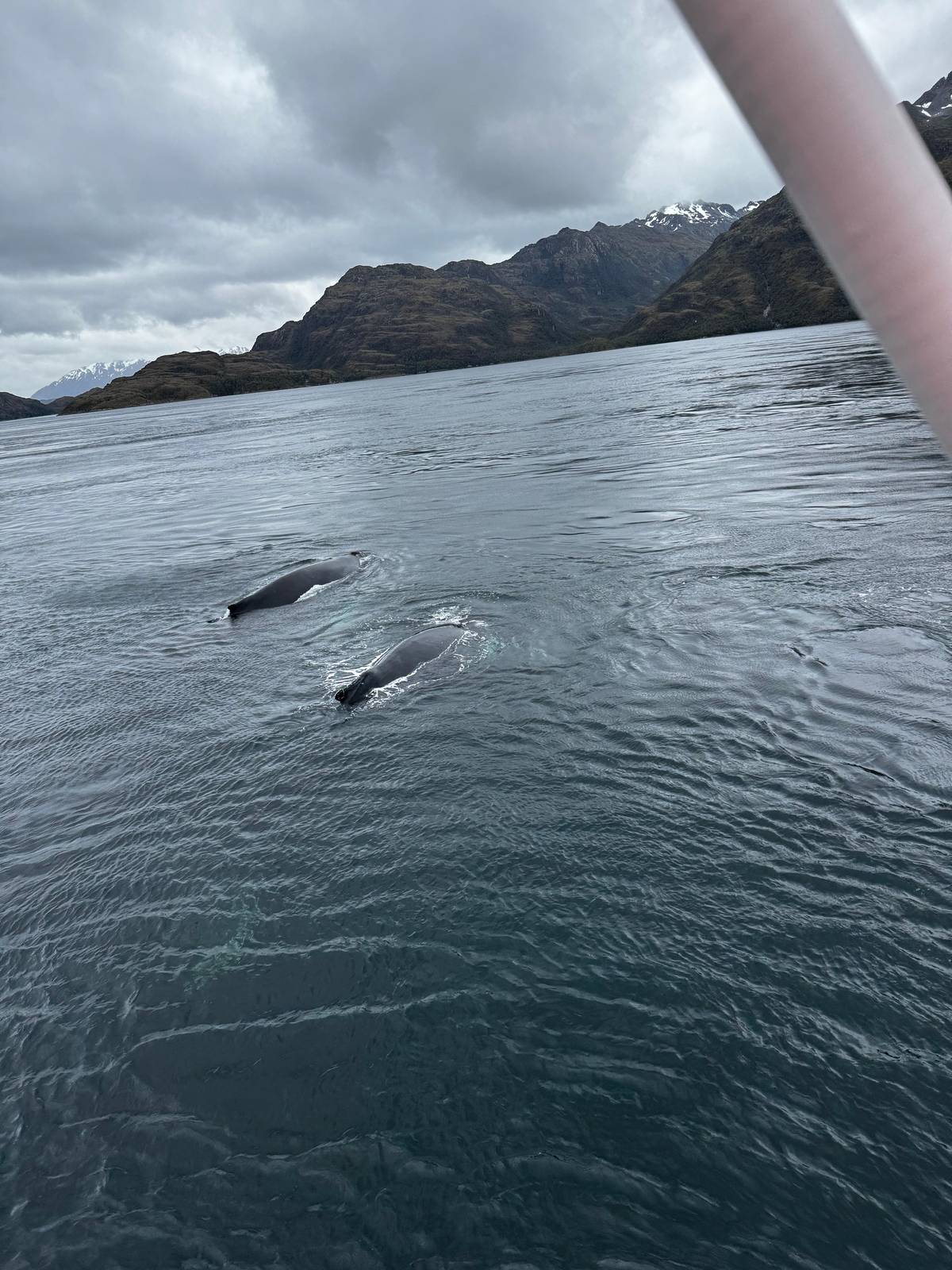 Insulation
 Protection
Decision helper
Is this trip right for you?
A quick check before you book
Take medication early
The CDC says it works best before the trip.4
Pack an extra layer
January highs average only 15.3 °C.17
Kayak trip, adults only
Guests must be at least 18 years old.
Ask the operator first
Susceptibility to motion sickness peaks between 7 and 12.18
Book with confidence
Chilean law bans harassing cetaceans.2
For example, when in a ship or other vehicle with limited outside visibility, the vestibular system reports motion to the central nervous system, but information from the visual system suggests the individual is not moving.
Cold water is the real risk
The serious danger on any boat in these latitudes is falling into cold water. The US National Weather Service says cold shock can be as severe in water of 10 to 15 °C as in water of 2 °C, and that gasping from sudden immersion can be triggered by water as warm as 25 °C.3 Hypothermia begins when core body temperature drops to 35 °C.20
The first minutes matter most. The US National Park Service teaches a 1-10-1 principle: about 1 minute to get your breathing under control, then about 10 minutes of meaningful movement to try to get yourself out.21 That is why every crew briefs passengers on life jackets and on where to stand when the boat is moving.
In practice the risk is small if you follow the crew. Hold a handrail when you move around, keep to the areas the crew allows, wear your life jacket whenever you are told to, and never sit on a railing for a photograph. A good picture is never worth a slip on a wet deck. Keep small children within reach on deck at all times, and agree with them in advance where they may stand.
Checklist
Pack for the strait
01
Wear
- Thermal base layer and a warm mid-layer
- Windproof, waterproof jacket
- Comfortable shoes with grip
02
Bring
- Passport or ID card
- Sunglasses, hat and gloves
- Motion sickness tablets, taken early
Video
whale watching tips & essentials from a deckhand photographer
The video stays switched off until you hit play.
Seasickness, and how to beat it
For most visitors the main discomfort is not danger but nausea. The CDC Yellow Book explains motion sickness as sensory conflict: on a ship with little outside view, the balance organs report motion while the eyes suggest you are still.19 The Strait of Magellan can be choppy, and a long day gives the stomach plenty of chances to complain. It usually passes once you are back on land.
Prevention works better than cure. The CDC says anti-motion-sickness medication is most effective when taken before you set off, not after symptoms start.4 For adults on trips of 6 hours or less it suggests meclizine or dimenhydrinate for mild to moderate motion, and for longer exposure a scopolamine patch for moderate to intense motion; ask a pharmacist or doctor which suits you.22
Simple habits help too. The CDC lists avoiding the places of greatest motion, such as the bow of a ship, as a countermeasure.8 Watch the horizon, stay in the fresh air if you feel queasy, eat lightly and sleep well the night before. Children under 2 do not usually get motion sickness, while susceptibility peaks between ages 7 and 12.18
What to wear on a whale watching tour
The question of what to wear on a whale watching tour has one answer here: layers. The booked tour asks you to bring warm clothing and comfortable shoes, plus a passport or ID card, and it does not allow luggage or large bags. Another listing on the same waters suggests trekking shoes or boots, a jacket or sweater, a scarf, a hat, sunglasses and water.
Start with a thermal base layer, add a fleece or wool mid-layer and finish with a windproof, waterproof shell. Gloves and a warm hat earn their place even in January, when the average high in Punta Arenas is 15.3 °C.17 On deck, wind and spray make it feel colder, and you will spend a lot of time standing still while you watch. Choose quick-drying fabrics where you can, because spray finds its way into every gap on a windy day.
If you choose the kayak trip into the marine park, the gear changes: you wear thermal clothing under a dry suit, plus a hat, gloves and sunscreen. That trip also requires you to be at least 18 years old and recommends a moderate level of fitness.
Whale watching tips for a long day on the water
A few whale watching tips make the difference between a good day and a great one. Bring binoculars, a spare battery and a small dry bag for your phone. Find a spot on deck early, and when the guides point, look low on the water for a blow before you look for the whale itself. Charge your camera the night before and switch your phone to airplane mode if you want the battery to last the whole day.
Pace yourself. The booked day lasts 12 hours, with an hour by bus at each end and long stretches of sailing between sightings. Its listing includes coffee, breakfast, lunch and a snack, so you do not need to pack a full meal, but a bar of chocolate and a bottle of water are welcome during the colder hours.
Know the signs of getting too cold. The CDC lists shivering, exhaustion, confusion, fumbling hands, memory loss, slurred speech and drowsiness as warning signs of hypothermia in adults.9 If you or a companion start to shiver hard, go inside, add a layer and drink something warm before heading back out.
Being a good guest near the animals
Safety runs both ways. The rules that keep the boat clear of the whales are there to protect the animals, and passengers can help. Keep your voice down when the engine idles near a group, avoid sudden runs across the deck that unsettle everyone, and never throw food or rubbish over the side.
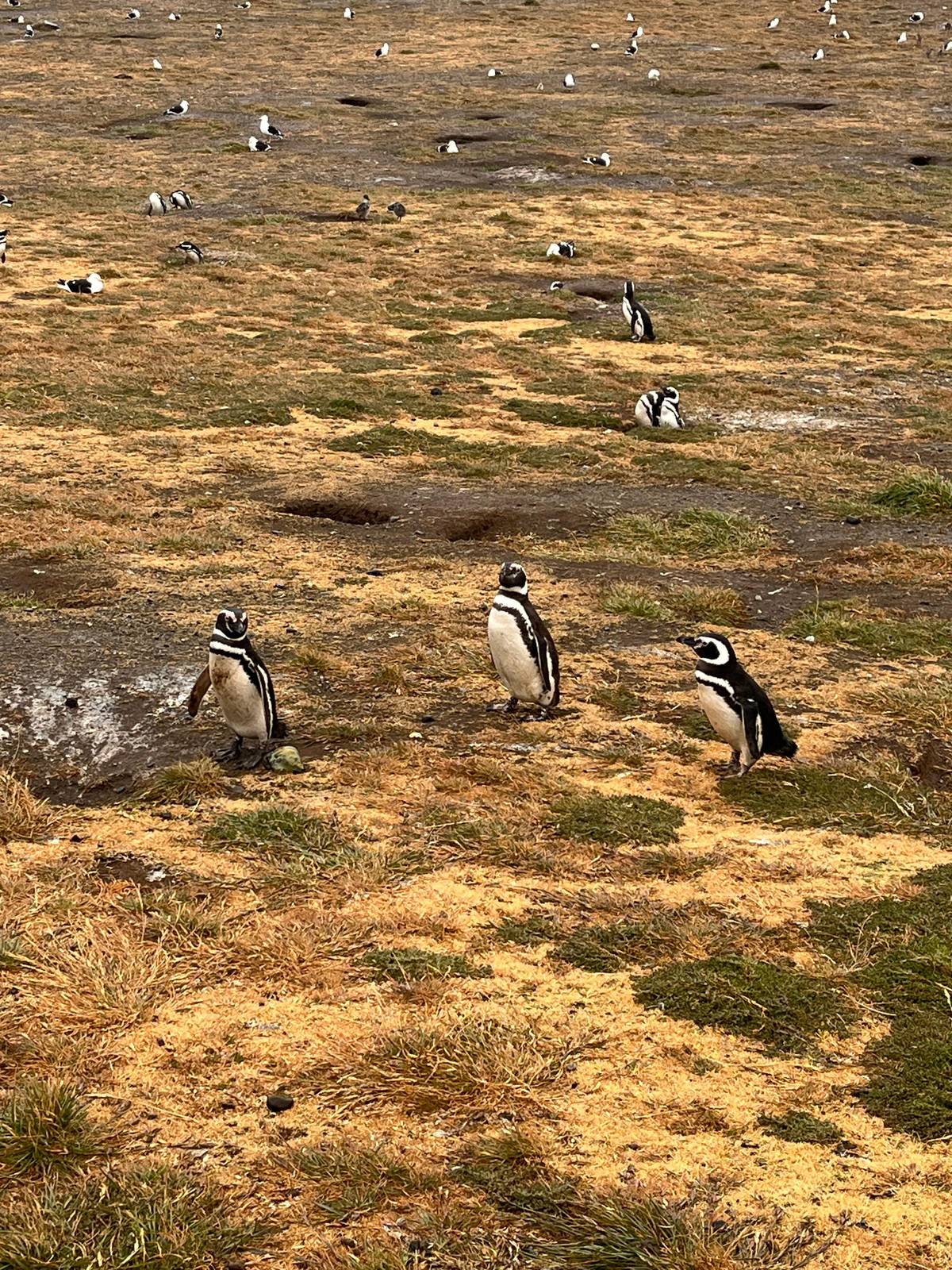
Sea lions and penguins deserve the same care. Boats must stay at least 50 meters from the nearest penguin and avoid disturbing birds that are feeding, resting or breeding.16 If you take a separate penguin trip to Isla Magdalena, the CONAF rule on land is no closer than 2 meters.23
Finally, trust the crew's judgment about the weather. If the captain turns back early or keeps the boat in a sheltered channel, it is because conditions on the open strait are worse than they look from the cabin. A shorter day with everyone well is better than a longer one with half the passengers seasick.
Pick your date
A day with the humpbacks of the strait
Meals, the navigation and a bilingual guide included; cancel for free up to a day before.


You ask,we answer.
Can a whale tip over the boat?
The rules keep boats well clear. Watching boats must stay at least 100 m from large whales.1
Is it legal to get close to whales in Chile?
Only within the rules. Harassing cetaceans is prohibited under Law 20.293.2
When should I take seasickness tablets?
Before you sail. The CDC says they work best taken before exposure.4
Where on the boat is calmest?
Away from the bow. The CDC advises avoiding the places of maximum motion.8
What should I wear?
Warm layers and good shoes. The booked tour asks for warm clothing and comfortable shoes.
Can children come?
It depends on the trip. The kayak trip requires guests to be at least 18 years old.
How cold is the air in summer?
Cool. January averages a high of 15.3 °C in Punta Arenas.17
Sources
What this text is based on
- 1Biblioteca del Congreso Nacional de Chile (LeyChile)Decreto 38 - Reglamento general de observación de mamíferos, reptiles y aves hidrobiológicas y del registro de avistamiento de cetáceos↩
- 2Biblioteca del Congreso Nacional de Chile (LeyChile)Ley 20293 - Protege a los cetáceos e introduce modificaciones a la ley Nº 18.892↩
- 3US National Weather ServiceCold Water Hazards and Safety↩
- 4US Centers for Disease Control and Prevention (CDC Yellow Book)Motion Sickness↩
- 5US National Marine Fisheries ServiceHumpback Whale↩
- 6Biblioteca del Congreso Nacional de Chile (LeyChile)Decreto 38 - Reglamento general de observación de mamíferos, reptiles y aves hidrobiológicas y del registro de avistamiento de cetáceos↩
- 7Biblioteca del Congreso Nacional de Chile (LeyChile)Decreto 38 - Reglamento general de observación de mamíferos, reptiles y aves hidrobiológicas y del registro de avistamiento de cetáceos↩
- 8US Centers for Disease Control and Prevention (CDC Yellow Book)Motion Sickness↩
- 9US Centers for Disease Control and PreventionPreventing Hypothermia↩
- 10Biblioteca del Congreso Nacional de Chile (LeyChile)Ley 20293 - Protege a los cetáceos e introduce modificaciones a la ley Nº 18.892↩
- 11Biblioteca del Congreso Nacional de Chile (LeyChile)Decreto 276 - Declara Area Marina y Costera Protegida Francisco Coloane↩
- 12Biblioteca del Congreso Nacional de Chile (LeyChile)Decreto 276 - Declara Area Marina y Costera Protegida Francisco Coloane↩
- 13Biblioteca del Congreso Nacional de Chile (LeyChile)Decreto 38 - Reglamento general de observación de mamíferos, reptiles y aves hidrobiológicas y del registro de avistamiento de cetáceos↩
- 14Biblioteca del Congreso Nacional de Chile (LeyChile)Decreto 38 - Reglamento general de observación de mamíferos, reptiles y aves hidrobiológicas y del registro de avistamiento de cetáceos↩
- 15Biblioteca del Congreso Nacional de Chile (LeyChile)Decreto 38 - Reglamento general de observación de mamíferos, reptiles y aves hidrobiológicas y del registro de avistamiento de cetáceos↩
- 16Biblioteca del Congreso Nacional de Chile (LeyChile)Decreto 38 - Reglamento general de observación de mamíferos, reptiles y aves hidrobiológicas y del registro de avistamiento de cetáceos↩
- 17World Meteorological OrganizationWMO Climate Normals, Station Punta Arenas airport (WMO 85934), 1991 to 2020↩
- 18US Centers for Disease Control and Prevention (CDC Yellow Book)Motion Sickness↩
- 19US Centers for Disease Control and Prevention (CDC Yellow Book)Motion Sickness↩
- 20US National Weather ServiceCold Water Hazards and Safety↩
- 21US National Park ServiceYour Safety: Hypothermia - Point Reyes National Seashore↩
- 22US Centers for Disease Control and Prevention (CDC Yellow Book)Motion Sickness↩
- 23↩
Keep reading