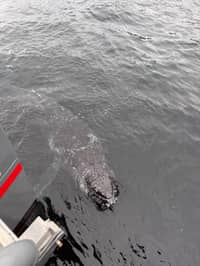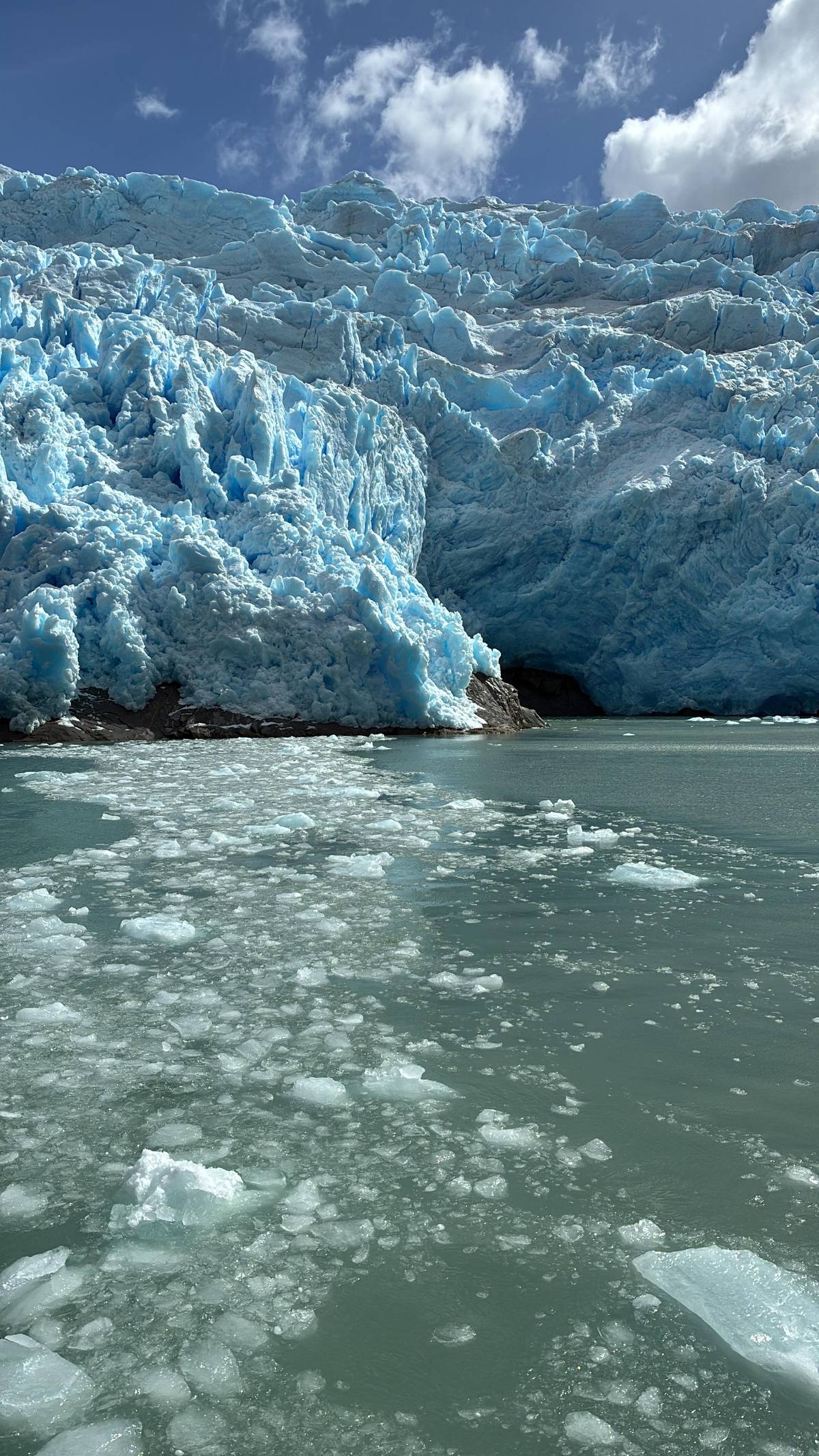
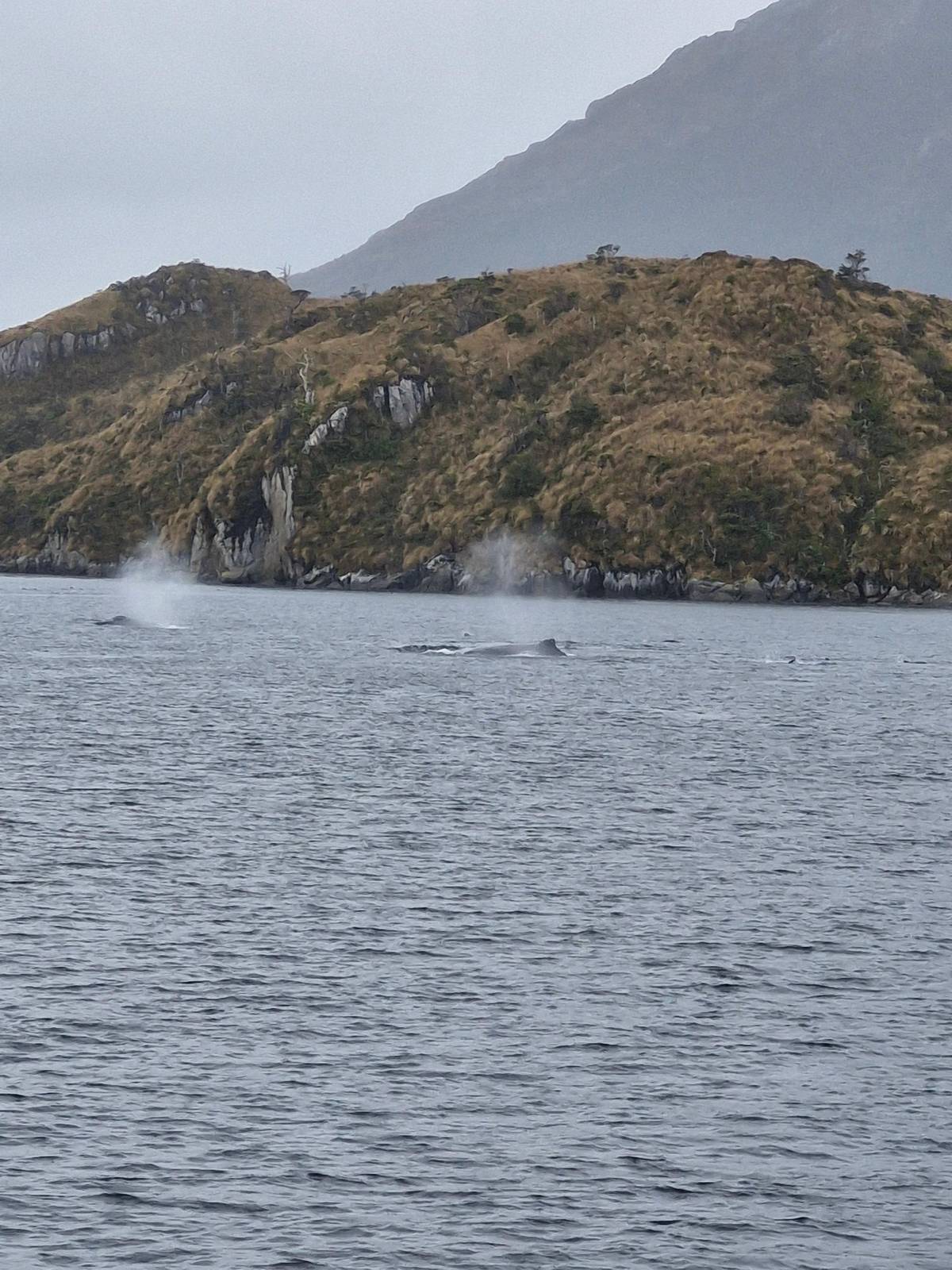
 Most whales
Peak season
December to March
- Whales
- Peak presence
- Daylight
- 12.6 to 16.9 hrs
- Highs
- 13 to 15.3 °C
Guides
Language
EnglishCurrency
US dollar · $GetYourGuide converts to the currency you select here.
Guide · Whale season
The Punta Arenas whale watching season follows the humpbacks that come to feed around Isla Carlos III each southern summer. Here is when they arrive, when they leave and how the weather changes in between.
Editorial team, puntaarenaswhalewatching.comUpdated October 22, 20267 min read39 sources
Season at a glance
The humpback whales of the Strait of Magellan are summer visitors. The waters around Isla Carlos III, in the western part of the strait, see their highest numbers between December and March.1 Field teams who followed the whales there analyzed sightings made from December through June, so the animals do not all leave the moment autumn starts.2 Another study describes significant concentrations around the island from summer into autumn.5
That gives a simple rule for planning. If the humpbacks are your priority, aim for the heart of the southern summer, when the peak months overlap. The shoulder months of April and May can still bring whales, but the research shows numbers building and falling across the season rather than a fixed opening and closing date. No study can tell you how many animals will be feeding on the day you sail.
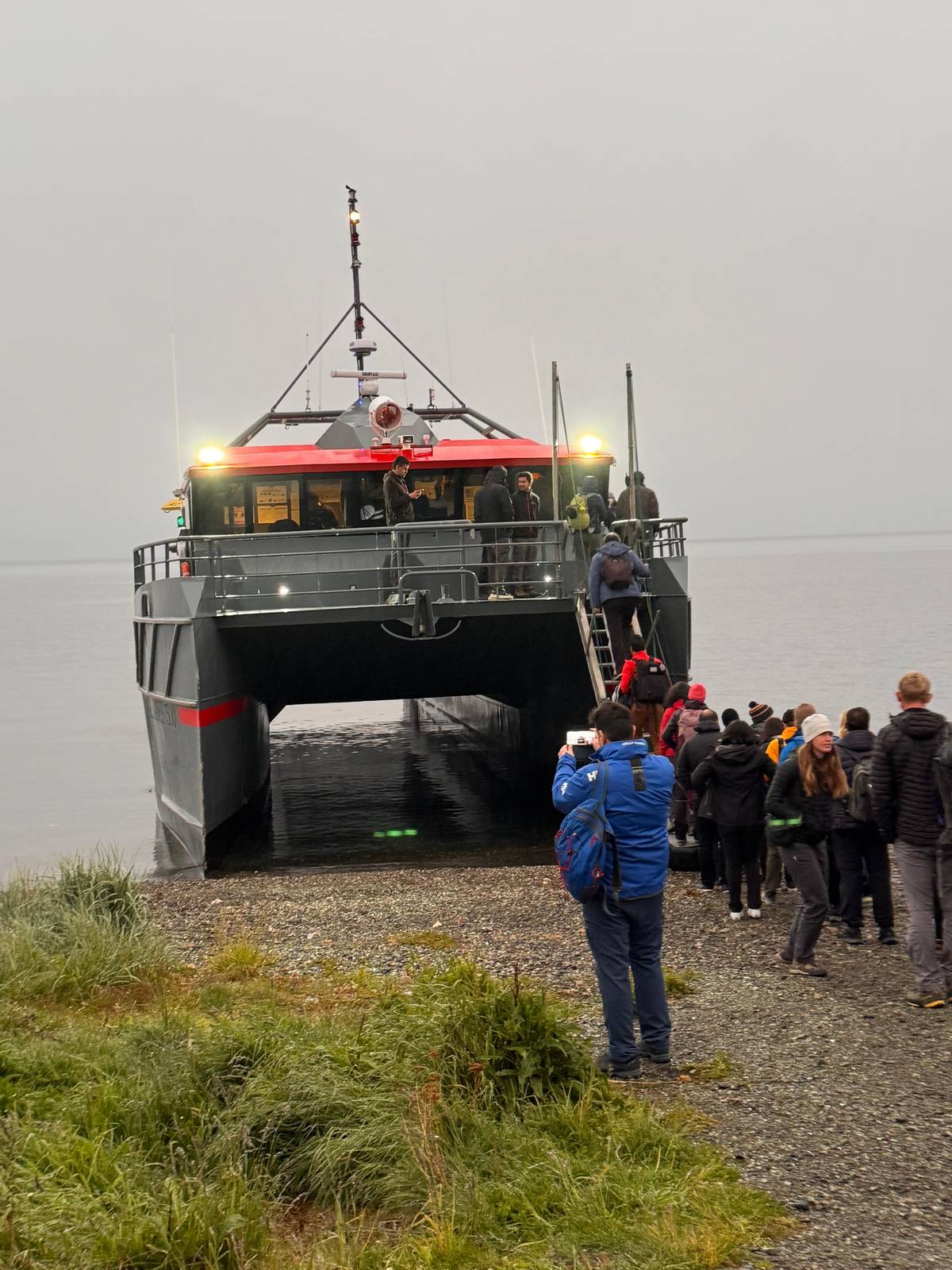
The tour this site books is a full day from Punta Arenas to the Francisco Coloane Marine Park, the protected feeding area around Isla Carlos III. Its listing does not name the months it runs, so check the dates its booking calendar offers for your trip, and read the operator's own sighting notes there rather than relying on a promise.
A humpback year
December
Presence around Carlos III starts its peak.1
January to March
The highest numbers of the year feed here.1
April to June
Researchers still logged whales until June.2
Austral winter
The population breeds from northern Peru to Costa Rica.3
The trip back
The fastest matched trips took 88 and 99 days.6
The whales you see near Carlos III belong to the humpback population of the eastern South Pacific. That population breeds in the austral winter along the coasts from northern Peru to Panama and Costa Rica.3 One paper puts it simply: these whales breed off Colombia and Ecuador and feed mainly off the western Antarctic Peninsula and in the Strait of Magellan.7
The journey between the two is long. Researchers matched fluke photographs of whales seen in the strait with whales photographed off Colombia and found a minimum one-way distance of 6,650 to 7,000 km.6 The two fastest trips took 88 and 99 days.6 Those six matched whales stayed in the strait for 72 days a year on average, with stays ranging from 3 to 125 days.8
So the whales are not resident all year. They arrive after a migration of weeks, feed through the summer and set off north again before the southern winter. That is why a July trip to Punta Arenas, however good for winter landscapes, is the wrong time for humpbacks. The breeding grounds are thousands of kilometers away by then.
Month by month
Climate
| Month | Daylight (h) | Darkness (h) | High / low | Wet days | Humpbacks at Carlos III |
|---|---|---|---|---|---|
| Jan | 16.4 | 7.6 | 15 / 7 °C | 8 | peak |
| Feb | 14.6 | 9.4 | 15 / 7 °C | 7 | peak |
| Mar | 12.6 | 11.4 | 13 / 5 °C | 8 | peak |
| Apr | 10.5 | 13.5 | 10 / 4 °C | 9 | seen |
| May | 8.6 | 15.4 | 7 / 2 °C | 8 | seen |
| Jun | 7.6 | 16.4 | 4 / 0 °C | 7 | seen |
| Jul | 8 | 16 | 4 / -1 °C | 7 | |
| Aug | 9.5 | 14.5 | 6 / 0 °C | 7 | |
| Sep | 11.6 | 12.4 | 8 / 1 °C | 6 | |
| Oct | 13.7 | 10.3 | 11 / 3 °C | 6 | |
| Nov | 15.7 | 8.3 | 13 / 5 °C | 6 | |
| Dec | 16.9 | 7.1 | 14 / 6 °C | 8 | peak |
Mean daily high and low and the count of days reaching 1 mm of rain are World Meteorological Organization normals for Punta Arenas airport, 1991 to 2020; the mid-month daylight is our own calculation.4 Season according to IUCN Marine Mammal Protected Areas Task Force (Western Magellan Strait IMMA).1
Three ways to time it
Most whalesDecember to March
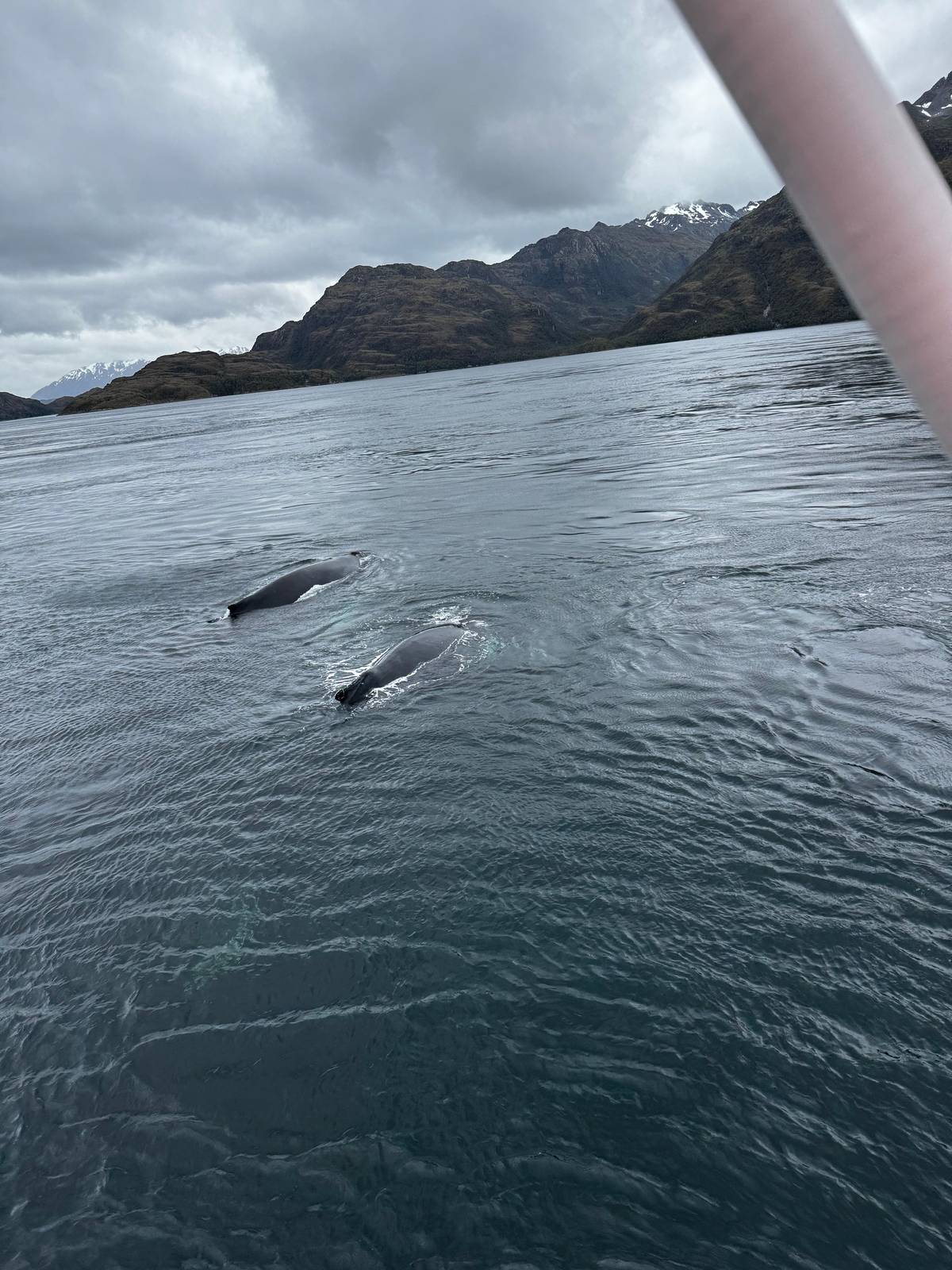 Fewer whales
April to June
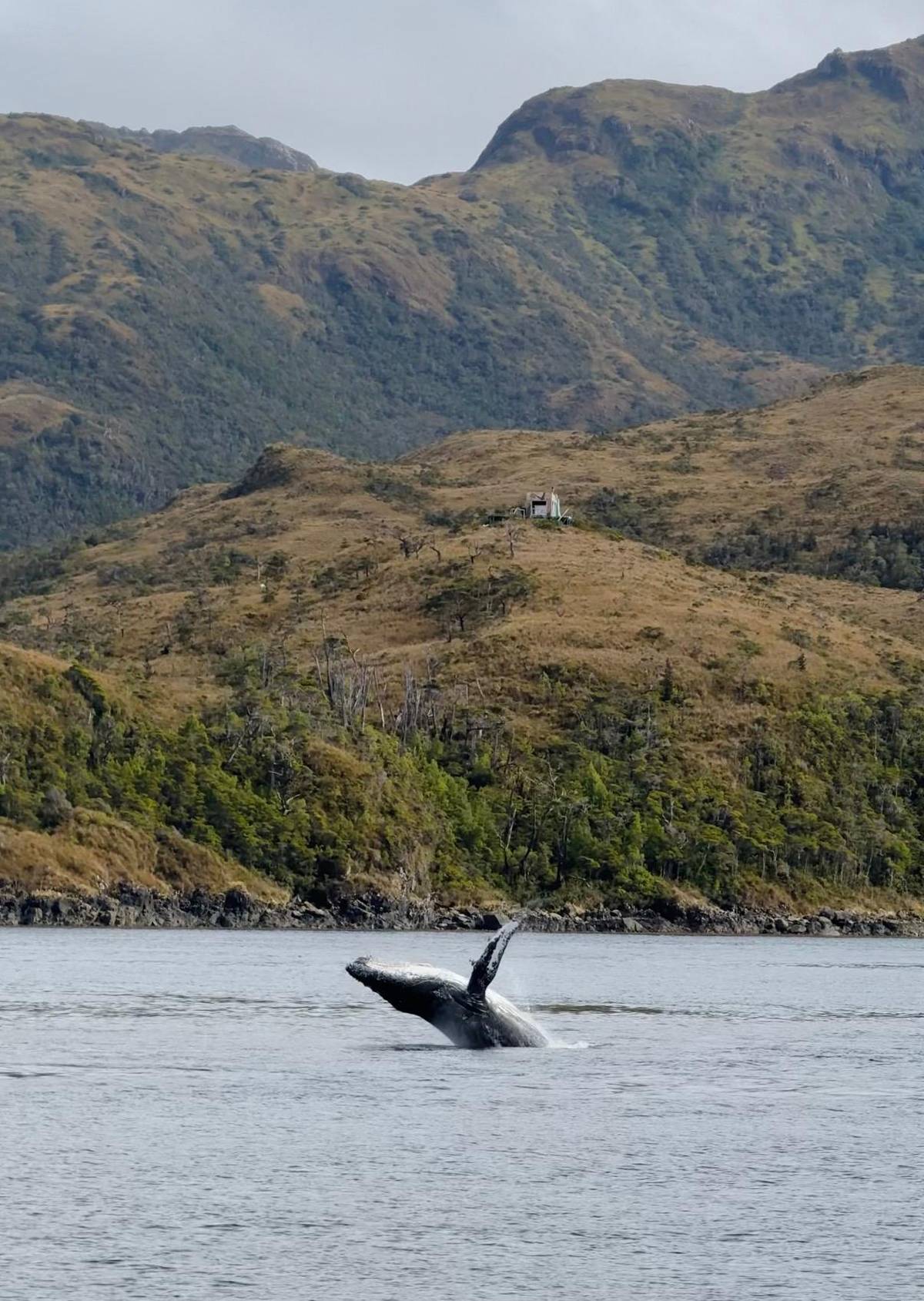 Whales away
July to November
Decision helper
Match the timing to what matters most to you
Presence around Carlos III peaks in those months.1
Mid-December has 16.9 hrs of daylight.4
The island is open to visits from October to mid-April.9
The Bahía Inútil reserve closes in those months.10
Peale's dolphins appear to live in the central strait all year.11
The whales mostly occur around Carlos III island in the western portion of the strait, with a peak in their presence there between December and March
Summer in Punta Arenas is cool rather than warm. January is the mildest month at the airport station, with an average daily high of 15.3 °C and a low of 6.9 °C.4 December follows with a high of 14.3 °C, and by March the average high has slipped to 13 °C.4 Out on the water, with wind across the deck, it feels colder than those figures suggest.
Daylight is the great gift of the peak season. At mid-December the sun is above the horizon for 16.9 hrs, and at mid-January for 16.4 hrs, by our own calculation from the city's latitude.4 By mid-March that has fallen to 12.6 hrs, and by mid-April to 10.5 hrs.4 A long day on the boat fits more easily into the long light of December and January. In late autumn the shorter days squeeze the same route into less light.
Rain falls in every month instead of arriving in a single wet season. The wettest month in the station record is April, with 45 mm and 9 days of at least 1 mm.4 February is the driest of the peak months, with 32 mm and 7 such days.4 Wind and cloud change by the hour here, so treat any month as one where you need a waterproof layer.
Map
The strait south of the city to Cabo Froward and Isla Carlos III, the penguin islands and Tierra del Fuego, and the wider south from Torres del Paine to Ushuaia.
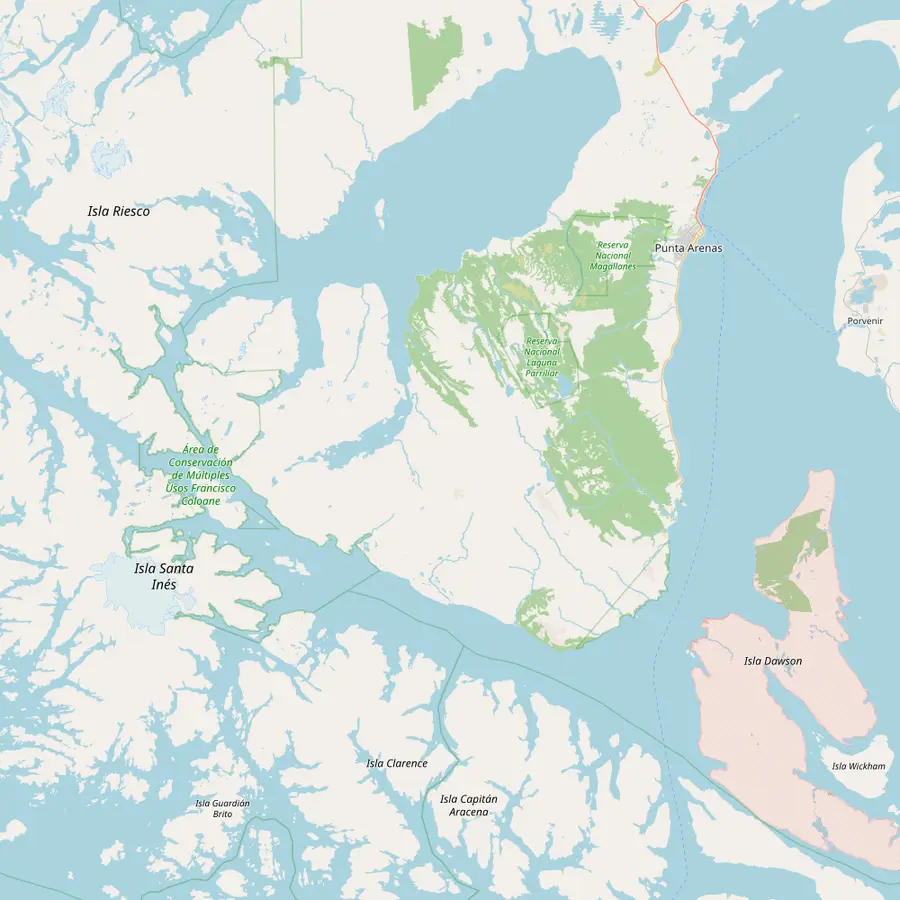 1Punta Arenas2Fuerte Bulnes3San Isidro lighthouse4Cabo Froward5Isla Carlos III
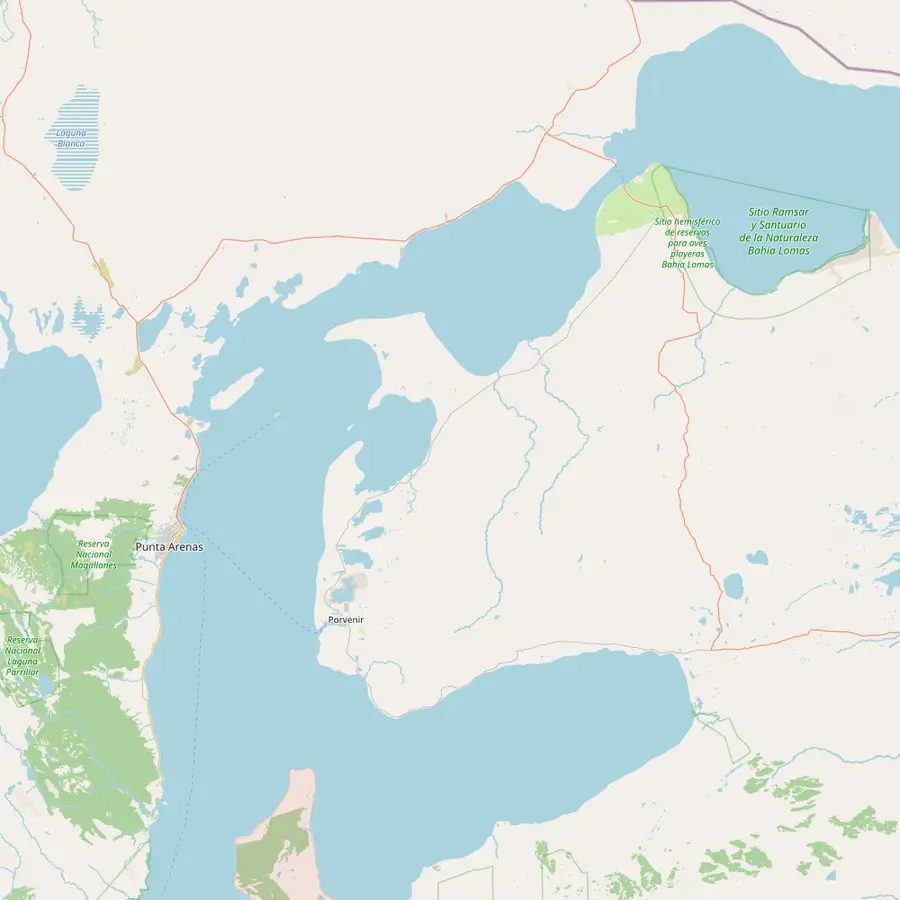 1Punta Arenas6Isla Magdalena7Isla Marta8Porvenir9Parque Pingüino Rey10Primera Angostura
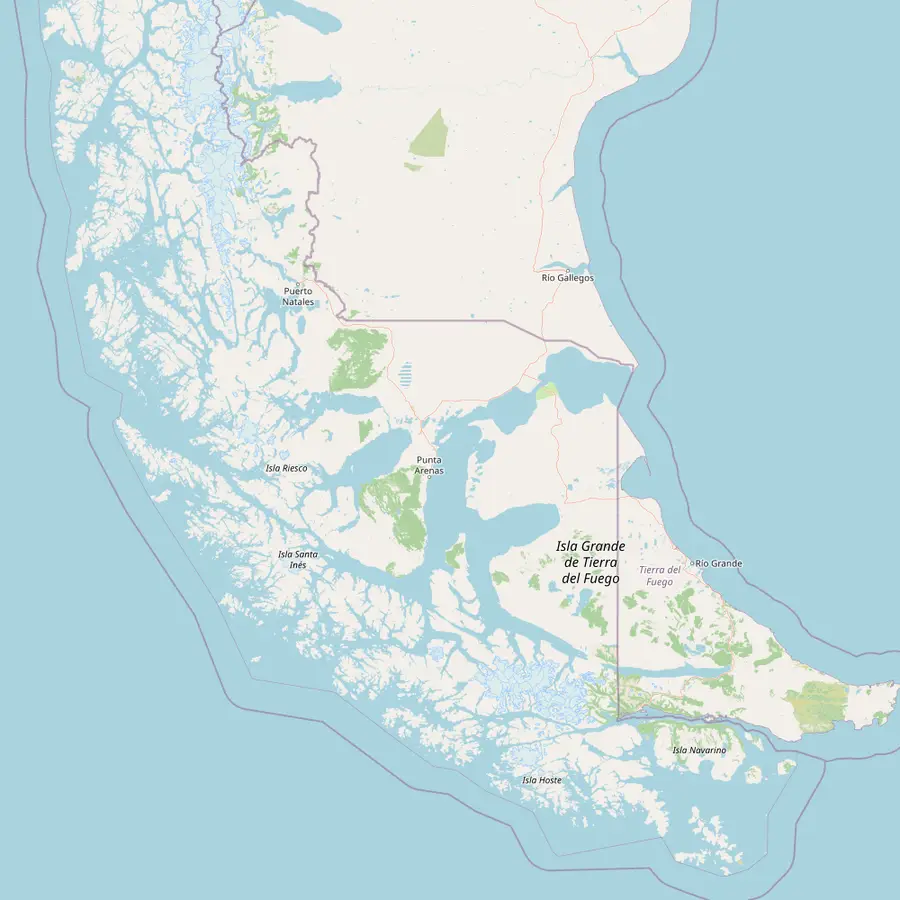 11Punta Arenas airport12Puerto Natales13Torres del Paine14Ushuaia
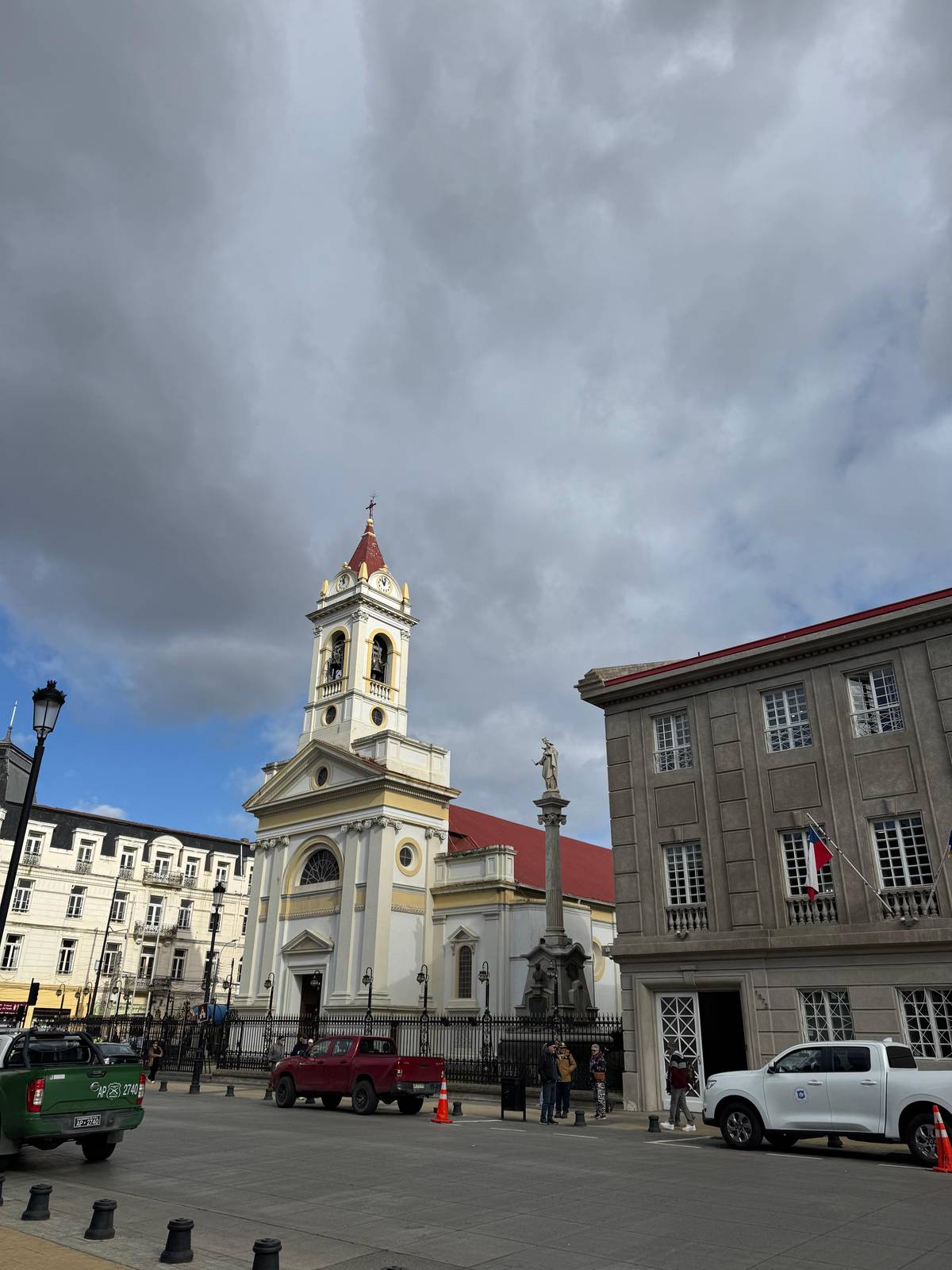
Capital of the Magallanes region, founded in 1848.1213
In Google Maps ↗Inaugurated in 1843; a national Historic Monument 58 km south of the city.1415
In Google Maps ↗70 km south of Punta Arenas and more than 100 years old.16
In Google Maps ↗Where the American continental landmass ends; the whale boat passes it for 30 minutes.17
In Google Maps ↗Humpback presence around the island peaks from December to March.1
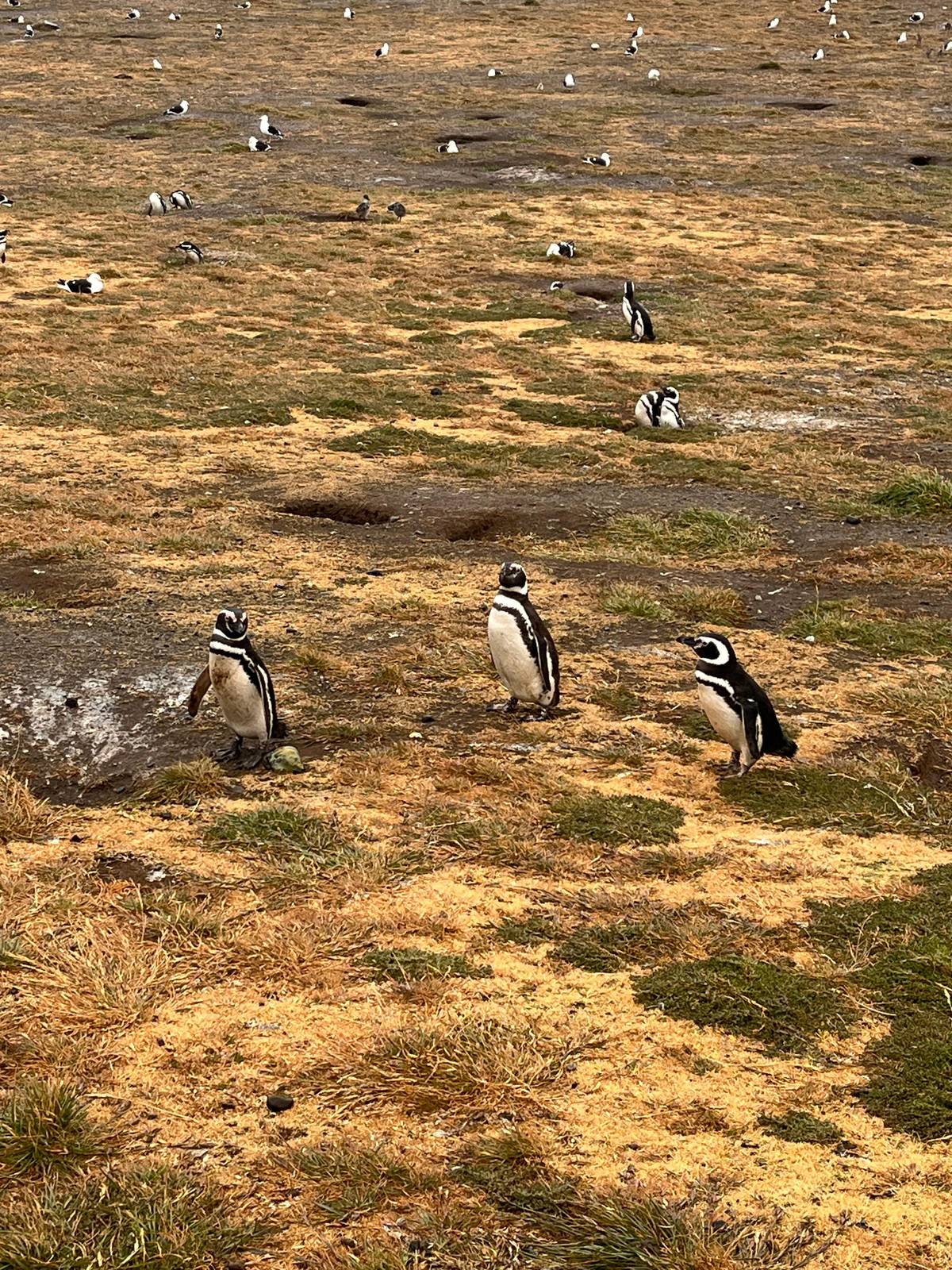
In Google Maps ↗About 7,000 pairs of Magellanic penguins nest here, 35 km northeast of the city.1819
In Google Maps ↗Sea lions and imperial cormorants; landing is prohibited.2021
In Google Maps ↗About 2 hours by ferry from Punta Arenas.22
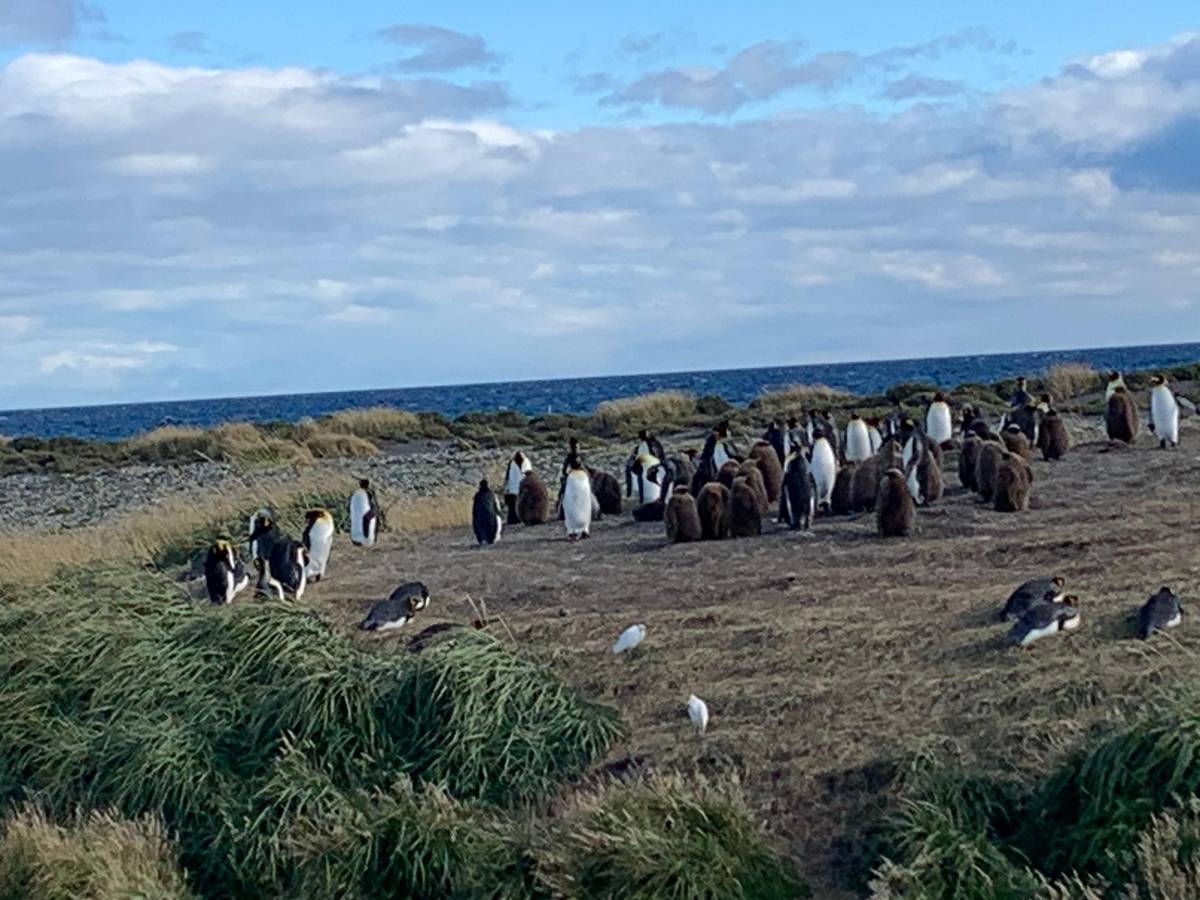
In Google Maps ↗King penguins at Bahía Inútil, 115 km from Porvenir.23
In Google Maps ↗The 20-minute ferry crossing to Tierra del Fuego.24
In Google Maps ↗20 km north of the city, with daily flights from Santiago.25
In Google Maps ↗About 250 km north of Punta Arenas by paved road.26
In Google Maps ↗National park since 1959, 112 km from Puerto Natales to the Sarmiento entrance.2728
In Google Maps ↗293 km beyond the San Sebastián border.29
In Google Maps ↗Checklist
Video
The video stays switched off until you hit play.
One of the reasons this feeding ground is so well studied is that the whales are loyal to it. A study using photo-identification from 10 sighting cruises over three austral summers, from 2002-2003 to 2004-2005, found a high return rate of 78.9%.3031 The authors concluded that the Magellan Strait is a feeding ground for at least part of the Southeastern Pacific humpbacks.31
Later work kept the count going. Of the whales photo-identified in the area, 64.0% were seen again in more than one year.32 The number of humpbacks using the area was estimated at 72 whales in 2008/2009 and 93 in 2016/2017, an annual increase of 2.31%.33 Those are small numbers for such a large stretch of water, which is part of why each sighting feels personal.
The individual whales are told apart by the pattern on the underside of the tail. Each fluke's pigment and shape is unique, used like a fingerprint, and a fluke can be up to 18 feet wide.34 When a whale lifts its tail before a deep dive, the guides and photographers on board are often watching for exactly that view.
The humpbacks come to the strait to feed, and their diet here is local. The population feeds mostly on krill (Euphausia lucens), lobster krill (Munida gregaria) and Fuegian sprat (Sprattus fueguensis).35 In one lunge-feeding behaviour studied in the strait, the prey seen and collected was always the krill, often with flocks of seabirds feeding on the same swarm.36
That link between whales and birds is worth remembering on deck. A cloud of seabirds working one patch of water can mean food near the surface, and food is what brings the whales up. A study of 37 identified whales in the strait described three lunging and one bubbling surface-feeding behaviour, two of them new for the species.37
The bubble-curtain feeding was seen only along coasts with cliffs over 30 m high, and the prey in every case was Fuegian sprat.38 You do not need to know the science to enjoy the day, but it explains why the boat may linger along a steep shoreline or under a swirl of birds while the guides scan the water. Binoculars help you follow those birds and pick out the first blow.
Most visitors combine the whales with other wildlife, and the calendars overlap well. The penguin colony on Isla Magdalena can be visited from October to mid-April on tourist boats from Punta Arenas.9 Magellanic penguins breed from September to February, so the early weeks of the whale peak are also busy weeks at the burrows.39
The king penguins of Tierra del Fuego follow a different timetable. Their reserve at Bahía Inútil closes from June to October because of the weather and for upkeep.10 A trip planned for December to March can fit the whales, Magdalena and the king penguins into the same week, weather allowing. Remember that the ferry crossing and the drive across the island make that a long day of its own, so it is best kept apart from the whale trip.
Dolphins are less tied to the season. Peale's dolphins appear to live in the nearshore waters of the central strait all year, with more animals in summer than in winter.11 If you visit outside the whale peak, a dolphin or penguin trip may suit you better than a full day out to Carlos III. A shorter outing also leaves energy for an evening walk along the waterfront, where the strait itself is part of the view.
The booked tour lasts 12 hours and lists free cancellation up to 24 hours before, plus reserve now and pay later. That flexibility matters on the strait, where wind can change a plan. Book early in your stay so that a day lost to weather still leaves room to try again. Keep the evening before free as well, so you can sleep early and lay out your warm layers the night before.
Leave a buffer after the trip too. The day covers 1 hour by bus each way and many hours of sailing through the Strait of Magellan and the marine park. A long day on the water followed by an early flight leaves no slack if the boat returns late. A spare evening also gives you time to dry wet gear and download the day's photographs before you pack.
Finally, keep your expectations honest. The research shows when the whales are most likely to be around Carlos III, not where they will surface on a given morning. Go in the peak months, give yourself a spare day, and let the landscape of glaciers, forest and open water carry the rest of the trip. Even a quiet day on the water rewards patient watching, and the guides often spot a blow long before anyone else on deck.
Pick your date
Meals, the navigation and a bilingual guide included; cancel for free up to a day before.
December to March. That is when humpback presence around Isla Carlos III peaks.1
Possibly. Sightings analyzed by researchers ran from December to June, but numbers fall after the peak.21
Not humpbacks, as a rule. The population breeds in the austral winter far to the north, from northern Peru to Costa Rica.3
Thousands of kilometers. The minimum one-way distance to Colombia was 6,650 to 7,000 km.6
No. Whales are wild animals, and the booked listing makes no promise of a sighting.
Cool, even in summer. January averages a high of 15.3 °C and a low of 6.9 °C at the airport station.4
Sources
Keep reading